

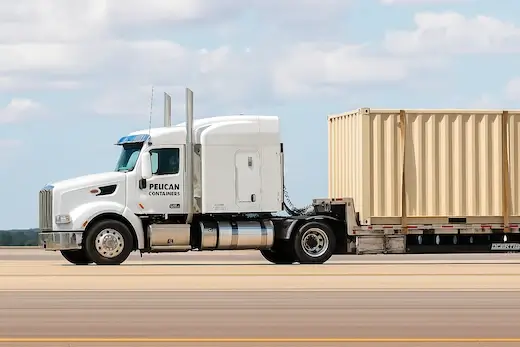
Shipping Container Delivery Guidelines
What Type of Truck Will Deliver Your Container?
Choosing the right delivery vehicle is critical for a successful drop-off. Whether you are planning a backyard retreat or a new retail concept, we offer four primary delivery methods to suit your site conditions:
- Flatbed / Chassis: The most cost-effective option. However, the truck cannot unload itself; you must have a forklift or crane on-site to lift the shipping container off the trailer.
- Tilt-Bed Truck: The most popular choice. The trailer bed tilts effectively, allowing the container to slide gently onto the ground without any extra equipment.
- Side Loader: Ideal for tight spaces. This truck picks up the container from both ends and places it directly next to the vehicle.
- Crane Truck: Used for difficult access. If you need to lift a container over a wall, fence, or obstacle, a crane truck is the necessary solution.
Unsure which truck you need? Don’t guess. Check our detailed guide on planning your container delivery or contact us today to discuss your specific site requirements.
The Trucks are Big,
We Need Space to Deliver
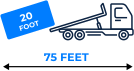
20 Foot Container
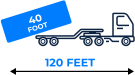
40 Foot Container

Customer Responsibilities

Before delivery
- Prepare the ground: Make sure the delivery site is clear of obstacles and the ground is level. Your shipping container deserves a stable space to call home.
- Clear the path: Ensure the route to your site is wide open—remove low-hanging branches, narrow gates, or other barriers that could block the truck.
- Notify neighbors: Let your neighbors know the storage container delivery date and time. This prevents inconvenience and ensures we have the necessary access through any shared spaces.

During delivery
- Be present: Please be on-site when the truck arrives to guide the driver and communicate any last-minute instructions.
- Spot hazards: Help the delivery team spot low-hanging objects or potential ground hazards that might escape the driver’s notice.
- Check placement: Ensure the container is placed in the correct orientation (doors facing the right way) as planned. Also, double-check for any immediate placement issues before the container delivery team departs.

After delivery
- Inspect immediately: Once you have your shipping containers delivered, inspect them thoroughly to ensure they are in the expected condition. If anything seems amiss, let our container delivery service team know immediately.
- Secure the unit: Lock and secure the container to prevent unauthorized access. We recommend reading our guide on container security to protect your investment.
- Maintain access: Keep the area around your container tidy to ensure it is easy to access and maintain in the future.
Your assistance during the delivery process not only helps with logistics, but it also ensures that your container is installed on your property safely and correctly.
Common Challenges
and Solutions
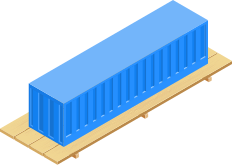
1. Uneven terrain After delivery
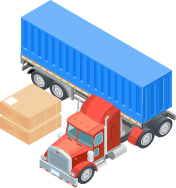
2. Tight spaces

3. Access route restrictions

4. Communication gaps

Post-Delivery Care


A little care goes a long way in preserving your investment. Don't neglect these tips, and remember—our container delivery company is always here if you need advice on upgrades or modifications.
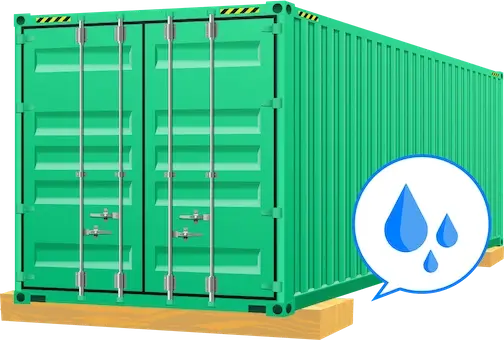
Keep Your Container Out of Standing Water
To support heavy loads, shipping containers rely on steel cross-members located beneath the wood flooring. While these beams are durable, they will corrode and eventually fail if left sitting in standing water for extended periods.
To prevent this damage, you must elevate the container to ensure airflow and drainage. Please have materials such as 8-foot-long 4”x4” wood blocks or railroad ties ready for the driver at delivery. For better long-term protection, we recommend preparing a proper shipping container foundation.
Make Sure the Doors are level.
Dealing with stuck or hard-to-open doors is the most common issue customers face after delivery.
Even though shipping containers are built from solid steel, they can still twist. If a container sits on an uneven surface or is loaded heavily on one side, it can twist just enough to misalign the frame, making the doors difficult to open and close.
Solution: To ensure your doors line up properly and move smoothly, the best solution is to place wood blocks under the door frame to level the unit. Most local hardware stores or lumber yards stock the 4×4 pressure-treated boards or railroad ties you will need.
We recommend having these materials ready:
- For 10–20 ft containers: 2 to 3 boards (4″x4″x8′ size)
- For 40–45 ft containers: 4 to 6 boards (4″x4″x8′ size)
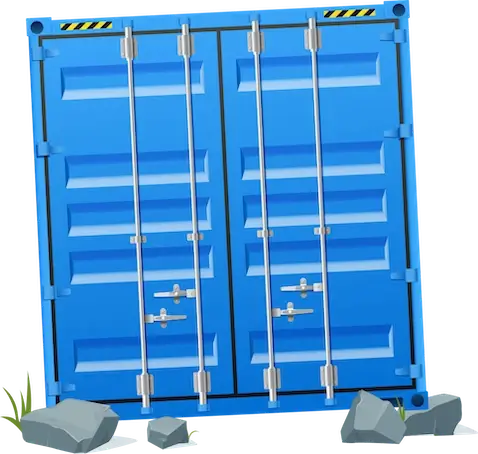
- Pro Tip: The most critical spot to support is directly under the cargo doors.
FAQ
How much does it cost to deliver a shipping container?
The shipping container delivery cost varies based on the container size and your distance from our nearest depot. Our pricing is transparent—no hidden fees, and we typically fulfill orders within 2–5 days. To get an exact figure, fill out a quote form on our website, and our specialists will provide a detailed breakdown of your container delivery costs immediately.
Does delivering a 40ft shipping container cost more than a 20ft container?
Yes, typically. A 40ft shipping container is heavier and requires a larger truck and more fuel to transport than a 20ft container. Consequently, the delivery fee reflects these additional logistical requirements.
Is the container delivery cost included when financing a container?
Yes! The cost of the delivery container service can be bundled into our financing package. The total is calculated once we finalize your purchase details. Feel free to ask our support team about including transport in your financing plan.
What are the different shipping container delivery methods?
We primarily use tilt-bed trucks (ground placement) and flatbed trucks (crane assist). For a full breakdown of side-lifters and crane trucks, visit our Shipping Container Delivery Services page.
When you place my shipping container, where will the door face?
You get to choose! During the ordering process, let us know if you want the doors facing the truck’s cab or the rear. This ensures that when the shipping container is delivered, the doors open exactly where you need them for easy access.
What do I need to do to prepare for delivery?
Preparation is key. Ensure your drop-off area is level, dry, and free of obstacles. Remember, our trucks cannot make sharp turns while unloading. You need 75 feet of straight clearance for a 20ft unit and 120 feet for a 40ft unit. For more tips, check our guide on safely unloading a shipping container.
How does inclement weather (rain or snow) affect delivery or price?
Adverse weather may delay the schedule for safety reasons, but it will never increase your shipping container delivery cost. Our team monitors conditions closely to ensure a safe arrival.
What if the weather causes a delivery issue?
If severe weather makes delivery unsafe (e.g., the ground is too soft for our heavy trucks), we will reschedule at no extra charge. Our container delivery company prioritizes safety to prevent damage to your property or the container.
Do drivers work for Pelican Containers or do you use a shipping container delivery service?
Our drivers are part of the extended Pelican Containers network. They possess the specific expertise required to manage tight spaces and challenging drop-offs. You can trust our shipping container delivery service to handle your unit with professional care.
What else about your shipping container delivery process sets you apart?
Pelican Containers distinguishes itself with speed (typically 2–5 days) and precision. We use state-of-the-art tilt-bed trailers and a vetted team to ensure every storage container delivered arrives in perfect condition, placed exactly where you want it.


