Curious About the Ventilated Shipping Container? Your Complete Guide

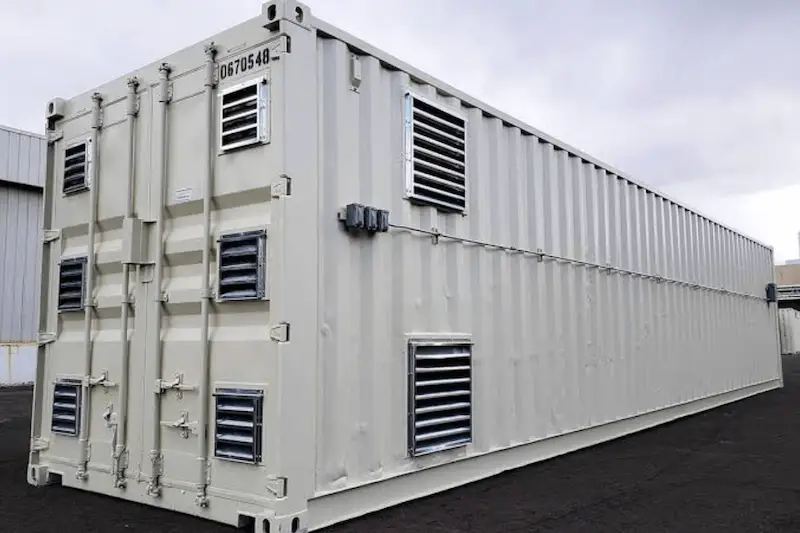
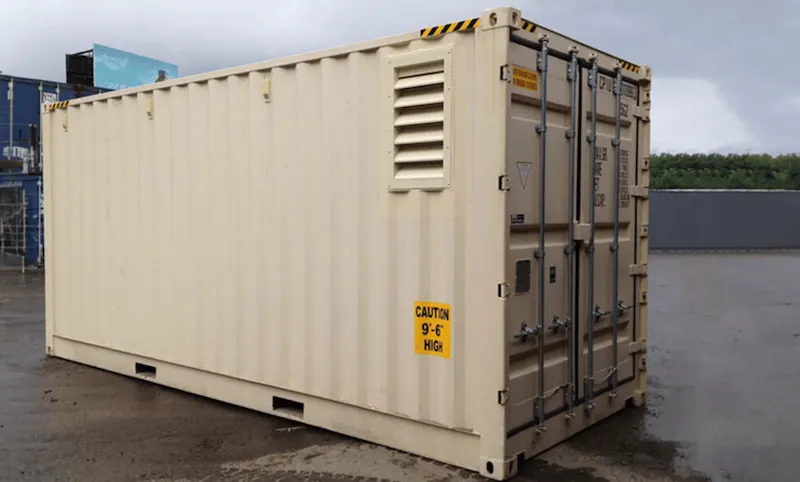
Ventilated containers have specific openings or fitted vents for air circulation, as their name implies. In most containers, you can see these vents on the rails at the top and bottom. It is also possible to customize shipping container air vents to match certain kinds of cargo.
Often referred to as “coffee containers,” ventilated containers are used to move cocoa beans, coffee beans, and other moisture-sensitive products. These units are essential for maintaining the quality of hygroscopic cargo during transit.
How Ventilated Shipping Containers Differ from Standard Containers
Ventilated shipping containers significantly differ from standard ones. While a standard shipping container is designed to be watertight and airtight, ventilated units have holes cut into them to provide regulated airflow and enough ventilation on the inside.
Air flow vent containers are designed specifically to move perishable goods in a safe atmosphere that preserves their freshness and quality during travel. While some specialized units (like porthole containers) connect to cold air supplies, the standard ventilated ISO container relies on passive convection. However, while ventilated containers guarantee some protection against moisture buildup, it is not provide nearly as much thermal protection as that of their insulated or reefer equivalents.
To better understand their construction, you can take a look at the dimensions and load capacities of 20ft and 40ft ventilated containers below. (For a broader look at sizing, check our guide to shipping container sizes and types.)
| Container type | Dimension type | Length | Width | Height | Load capacity (kg) | Load capacity (Ibs) |
| 20-foot ventilated container | External | 20 feet | 8 feet | 8.5 feet | 28,000 – 30,000 | 61,729 – 66,139 |
| Internal | 19 feet 4 inches | 7 feet 8 inches | 7 feet 10 inches | |||
| 40-foot ventilated container | External | 40 feet | 8 feet | 8.5 feet | 26,000 – 28,000 | 57,320 – 61,279 |
| Internal | 39 feet 5 inches | 7 feet 8 inches | 7 feet 10 inches |
Primary Uses for Ventilated Shipping Containers
Ventilated shipping containers are primarily used to transport:
- Fresh vegetables and fruits (potatoes, onions, garlic).
- Plants and cut flowers.
- Medical supplies and temperature-sensitive medications (that do not require deep freeze).
- Dairy goods like cheese and butter.
- Natural cosmetic goods.
- Sensitive electronic devices and components.
Also, as mentioned above, air flow vent containers are widely used to transport products like coffee beans, cocoa, grains, and spices, vital for the farming and agriculture industry. Other types of cargo transported and stored in them include wood and timber-related products, textiles, ceramics, and leather. The airflow prevents mold, mildew, and spoilage, reduces the risk of warping or damage from trapped moisture, and maintains product integrity.
Key Benefits of Using Ventilated Shipping Containers
Notable benefits of storage container ventilation include:
- Enhanced perishable goods air circulation. The cargo is kept in a well-ventilated atmosphere thanks to container vents. The constant flow of air helps maintain everything at a comfortable temperature and keeps humidity from being too high.
- Preventing mold growth and condensation. Excess moisture that might lead to “cargo sweat” is removed by the vented containers’ regulated airflow and storage container ventilation. Keeping a dry interior helps these containers protect perishable items from mold development. If you are struggling with moisture in standard units, read our guide on how to prevent mold in shipping containers.
- Increased cargo freshness and quality. Shipping container vents prolong the shelf life and reduce spoilage of fruits, vegetables, and flowers by limiting exposure to moisture and avoiding drastic temperature swings.
- Ventilated transportation and storage. Ventilated shipping containers are perfect for keeping perishable goods in warehouses or distribution centers because they include fitted vents that allow for constant ventilation.
- Less contamination and odor risk. Odors are well dispersed by the regulated airflow, which prevents them from permeating other goods or the container. Proper ventilation also reduces the accumulation of mold and excess moisture.
Moreover, these containers fit ships, trucks, and trains, among other means of transportation, due to their uniform dimensions. Ventilated shipping containers also satisfy certain standards for design and manufacture (ISO 1496), including appropriate ventilation, insulation, security elements, and space restrictions.
Different Types of Ventilated Shipping Containers
Although they have a similar use, vented containers differ in nature:
1. Standard Ventilated Containers
These are the most commonly used ventilated containers, equipped with ventilation openings along their upper side panels. They serve as the standard ventilated sea container for international logistics.
Dimensions:
| 20-foot standard ventilated container | 40-foot standard ventilated container | ||
| External dimensions | 20 feet (L) x 8 feet (W) x 8.5 feet (H) | External dimensions | 40 feet (L) x 8 feet (W) x 8.5 feet (H) |
| Internal dimensions | 19 feet 4 inches (L) x 7 feet 8 inches (W) x 7 feet 10 inches (H) | Internal dimensions | 39 feet 5 inches (L) x 7 feet 8 inches (W) x 7 feet 10 inches (H) |
These containers are perfect for transporting items that are sensitive to moisture, such as fabrics, wood, and agricultural products like grains, coffee, and cocoa. Container vents inhibit mildew, fungus, and spoiling.
2. High Cube Ventilated Containers
High cube ventilated containers are a variation of the standard type with increased height to accommodate larger or bulkier cargo. If you are unfamiliar with the height differences, our article on standard vs. high cube containers explains this in detail.
Dimensions:
| 20-foot high cube ventilated container | 40-foot high cube ventilated container | ||
| External dimensions | 20 feet (L) x 8 feet (W) x 9.5 feet (H) | External dimensions | 40 feet (L) x 8 feet (W) x 9.5 feet (H) |
| Internal dimensions | 19 feet 4 inches (L) x 7 feet 8 inches (W) x 8 feet 10 inches (H) | Internal dimensions (approximately) | 39 feet 5 inches (L) x 7 feet 8 inches (W) x 8 feet 10 inches (H) |
High cube containers are often used for substantial but light items, including horticultural products (plants, seeds, or flowers), which need more room and ventilation to be transported safely.
3. Specialized Ventilated Containers
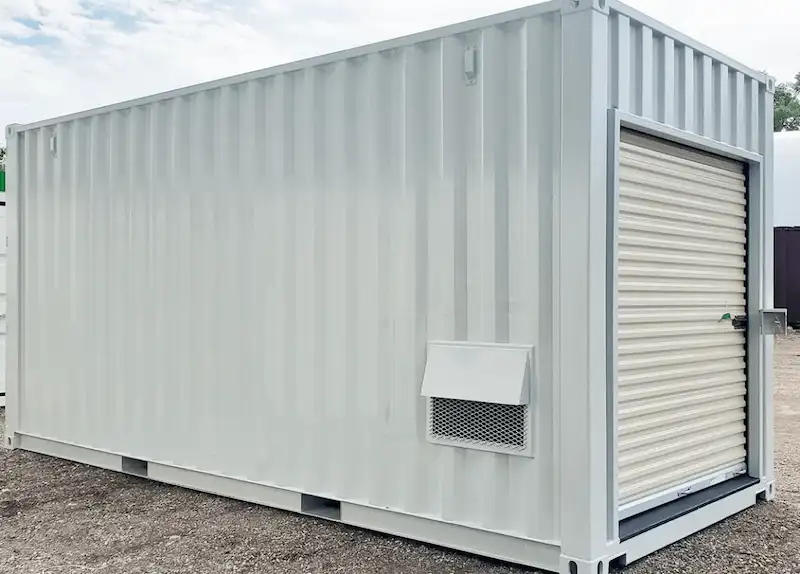
These are used for specific shipping requirements and include modified or custom-built designs fit for certain goods or industry standards. Specialized ventilated containers feature advanced airflow systems for transporting/storing sensitive cargo, custom dimensions to fit non-standard goods, and reinforced structures for heavier ventilation-specific goods like treated lumber.
Choosing the Right Ventilated Container for Your Needs
Thinking about how to use air flow vent containers? Before choosing a ventilated container, think about what you’re shipping.
- Assess the Cargo: If your products are moisture-sensitive — such as grains, coffee beans, or timber materials — you should always use a standard vented container. Its sea container vents prevent moisture, mold, and mildew.
- Volume vs. Weight: If you are handling light but bulky items like flowers, fabrics, or plants, you will value the additional vertical space of a high cube ventilated container.
- Special Requirements: A specialized ventilated container is perfect for unusual and unconventional shipments, such as treated lumber or specialist agricultural products.
- Size Matters: Don’t undervalue the need to weigh your shipment; it will prevent subsequent problems. 20ft containers are generally sufficient for lesser or ordinary loads. A 40-foot container is suitable for larger, heavier goods.
- Environmental Factors: Is your route humid? Are you passing through areas with varying temps or tropical climates? Designed to manage moisture, a natural ventilation container will preserve airflow and protect your products.
Expert Tip: If you don’t commonly transport products, think about renting a shipping container instead of purchasing. Always carefully check a container before committing to it; look for strong construction, undamaged ventilation systems, and no evidence of wear and tear that could compromise its function.
Maintenance and Care for Ventilated Shipping Containers
If you want your vented shipping containers to last and work well, you must maintain them properly. For a comprehensive checklist, refer to our guide on how to maintain shipping containers.
- Routine Inspections: Check ventilation systems to guarantee appropriate airflow, inspect seals for wear, and look for any structural damage or corrosion and fractures. Intact seals keep out dirt, insects, and water.
- Cleaning: Pay special care to the walls, flooring, and sea container vents when you wash the inside with water and a gentle detergent after each usage. Keep the container totally dry to avoid mold or corrosion.
- Prompt Repairs: Use rust-proof sealant to treat little corrosion and fix dents or cracks before they get worse.
- Proper Storage: Finally, good storage safeguards your containers even when not in use. You should protect them from severe weather and place them on flat, elevated land.
Vanessa is a dedicated writer and content enthusiast at Pelican Containers. With a background in practical writing and a keen eye for clarity, she transforms complex container topics into easy-to-understand and useful content. Her passion lies in exploring the evolving world of container usage — from smart storage hacks to global logistics trends.
When she's not writing, Vanessa loves discovering creative shipping container projects or traveling to find new inspiration.
Explore thoughtful, informative, and accessible content with Vanessa!
Vanessa is a dedicated writer and content enthusiast at Pelican Containers. With a background in practical writing and a keen eye for clarity, she transforms complex container topics into easy-to-understand and useful content. Her passion lies in exploring the evolving world of container usage — from smart storage hacks to global logistics trends.
When she's not writing, Vanessa loves discovering creative shipping container projects or traveling to find new inspiration.
Explore thoughtful, informative, and accessible content with Vanessa!
FAQ
What are ventilated shipping containers and why are they important?
A ventilated container is a standard shipping container with additional ventilation openings (necessary to stop condensation within the container). Condensation may harm cargo that is sensitive to temperature and environment, such as cocoa beans and coffee, which is why shipping container air vents are important for shipping them safely.
How do ventilated containers differ from standard containers?
Ventilated containers provide continuous airflow via their built-in vents, in contrast to the sealed and airtight nature of standard shipping containers. This avoids the problem of condensation accumulation, which is prevalent in standard containers and may be a problem during climate-sensitive or long-distance transportation.
What are the key benefits of using ventilated shipping containers?
Ventilated containers regulate humidity levels and preserve ventilation, preventing damage from moisture. Durable and adaptable, they fit products with temperature sensitivity. Their design guarantees that goods will arrive in perfect condition, avoiding expensive losses.
What types of goods are best suited for ventilated containers?
Ventilated containers (often called the coffee container) are perfect for goods that need airflow or are vulnerable to moisture deterioration. Common examples include coffee beans, cocoa, cereals, fresh vegetables, textiles, lumber, and several kinds of machinery.