Shipping Container Investment: How It Works and What Can Go Wrong

Shipping container investment means buying containers to earn from them. You lease them to carriers or operators, sell them when prices rise, or do both. None of it is guaranteed. What you earn depends on the price you pay, how often the box is on hire, and what it costs to store, repair and eventually sell.
This guide covers how each approach works, who actually makes money in the container business, what it costs, and which risks to check before you buy. We sell containers and we don’t give financial advice, so use this as background for your own research.
How does shipping container investment work?
There are three routes. Most investors pick one, and some combine them.
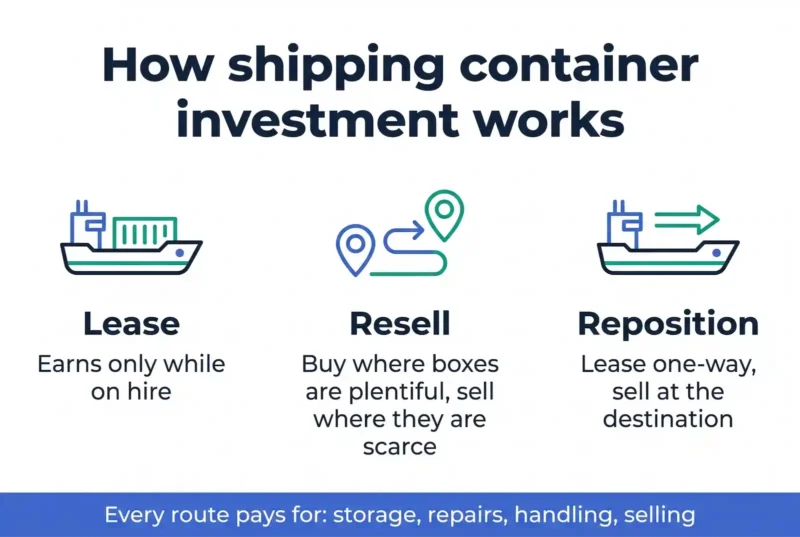
Leasing containers to carriers
You buy containers and lease them out, usually through a leasing company or agent, to shipping lines and cargo owners. They pay a daily or term rate while the box is on hire. Income is steady only while the container stays leased. Between leases it earns nothing, and you still pay for storage at a depot.
Buying low and reselling
Container prices differ by region and move with supply and demand. Some buyers pick up containers where there is a surplus and sell where boxes are scarce. The gap has to cover the purchase, depot fees, handling, repairs and the wait for a buyer. A price difference on paper often shrinks once those costs are counted.
Repositioning and selling
Repositioning combines the two. You lease a container into a region where boxes are short, then sell it there instead of paying to bring it back. It only works when someone will take the box one-way and the local market can absorb it.
Who actually makes money from containers?
Mostly large leasing companies. Lessors own roughly half of the world’s container fleet. Drewry put the share at nearly 52% in 2018. Newer figures sit in its paid Container Census & Leasing report, so treat the share as about half rather than a precise number. Shipping lines own the rest. Lessors buy in volume, run depots in major ports and spread risk across very large fleets.
A private investor with a handful of containers has higher unit costs, less negotiating power and more exposure to one bad lease. It can still work, but the numbers are tighter. Decide early whether you will own and manage the boxes yourself or buy through a company that manages them for you. If it’s the second, read the contract for fees, who holds title, what happens when a container is lost or damaged, and how you exit.
Be careful with any offer of a fixed, guaranteed return on containers. Real container income moves with demand and utilization. If a return is promised, ask who pays it and what backs it.
Which containers suit investment?
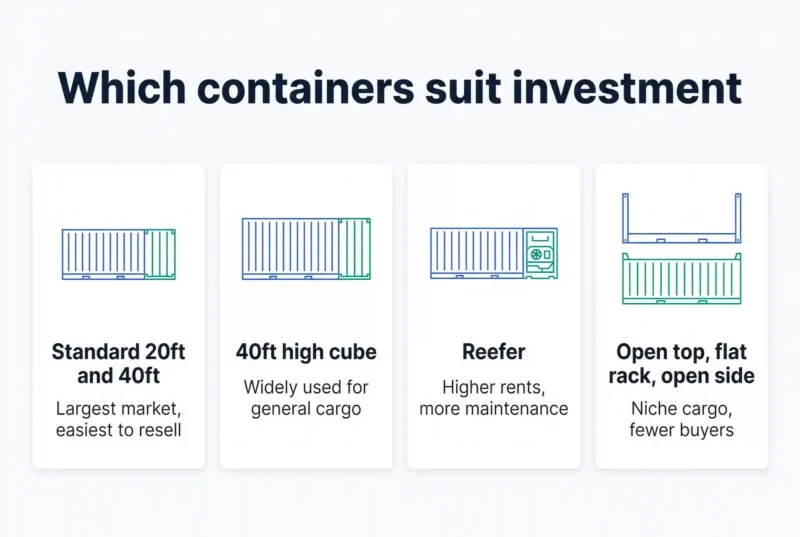
Standard dry containers are the easiest to lease and resell because carriers need them everywhere. Specialty units can earn more per day but are harder to move on.
- Standard 20ft and 40ft dry containers: the largest market and the easiest to resell. See our 20ft shipping containers.
- 40ft high cube: one foot taller than standard and widely used for general cargo. See our 40ft high cube containers.
- Reefers: usually higher rents, but they cost more up front and the refrigeration unit must be maintained and tested, so more can go wrong.
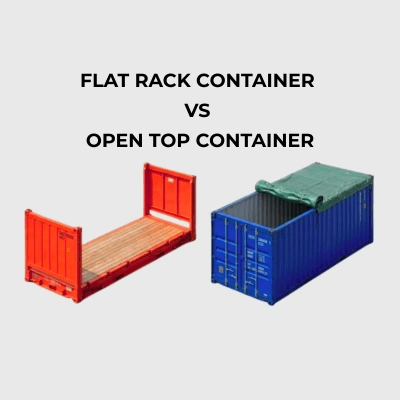
- Open top, flat rack and open side: they serve niche cargo, so there are fewer buyers and a slower sale.
Grade matters as much as type. Units that go back into ocean service need a valid CSC safety plate and regular inspection. Our container condition grades explain the difference between one-trip, cargo-worthy (CW), wind and water tight (WWT) and as-is units.
What does shipping container investment cost?
The purchase price is only the first line. A container that looks cheap to buy can still be a thin-margin asset once you add:
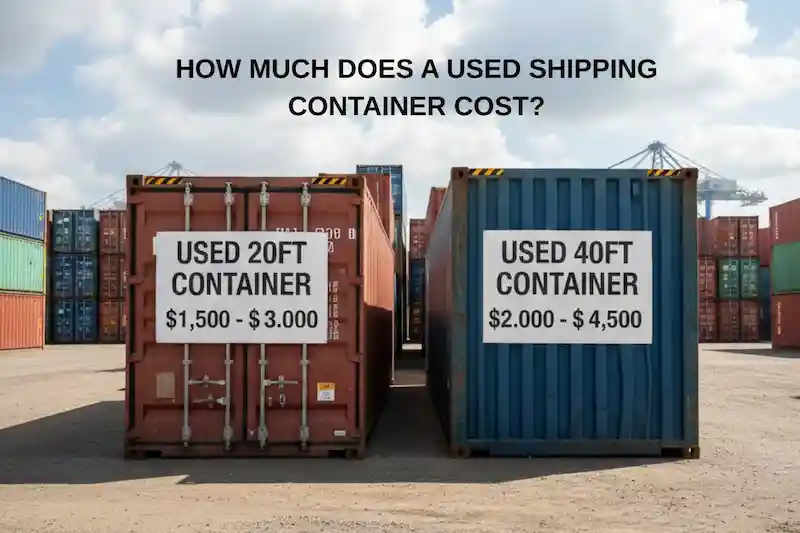
- the purchase price, which varies by size, grade and region (see our container prices and the guide to what a used shipping container costs)
- delivery or positioning to a container depot
- depot storage for every day the box sits idle
- cleaning, repairs and inspections
- insurance
- leasing agent or management fees
- selling costs when you exit
What are the real risks of investing in shipping containers?
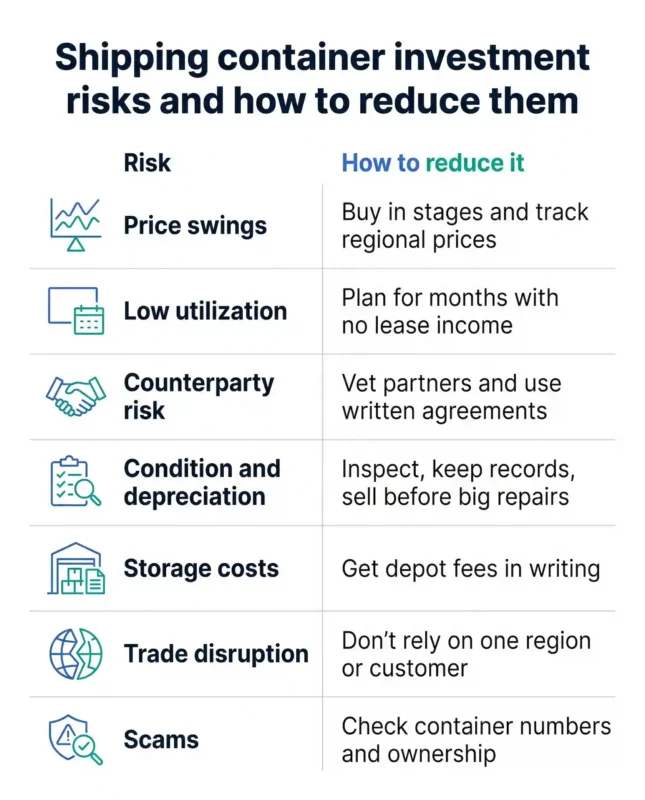
| Risk | What it looks like | How to reduce it |
|---|---|---|
| Price swings | Purchase and resale prices move with trade volumes and manufacturing costs. In early 2026, low new-container prices pushed down lease rates and used-container sale prices at Triton, a leading lessor, which booked a small loss on used-container sales that quarter. You can sell for less than you paid. | Don’t buy everything at once. Track regional prices before each purchase. |
| Low utilization | Boxes sit idle and earn nothing. Utilization is high when most boxes are on long leases, but it moves: Triton’s average dipped to 97.1% in the first quarter of 2026 and recovered to 98.0% in the second as Middle East disruptions lifted leasing demand. In the 2008 to 2009 downturn, lessor utilization fell from over 95% to little more than 85%. | Plan for months with no lease income. |
| Counterparty risk | A lessee or manager pays late, stops paying, or loses track of the container. | Vet partners, use written agreements and ask how containers are tracked. |
| Condition and depreciation | Damage, corrosion and age cut lease rates and resale value. | Inspect before buying, keep records and sell before heavy repairs. |
| Storage and handling costs | Depot fees pile up while the container is unleased. | Get fees in writing before you buy. |
| Trade disruption | Tariffs, port problems or new rules shift demand between regions. | Avoid depending on one region or one customer. |
| Scams and unrealistic returns | Offers for containers that don’t exist, or returns that can’t be paid. | Ask for container numbers (ISO 6346) and confirm the seller owns them. |
How does container investment compare with stocks, bonds and real estate?
| Asset | Liquidity | Hands-on work | Income pattern | Main risk |
|---|---|---|---|---|
| Shipping containers | Moderate. You need a buyer and depot logistics. | Low with a manager, high if self-managed | Lease payments only while the box is on hire | Utilization and resale price |
| Stocks | High | Low | Dividends and price gains, both variable | Market volatility |
| Bonds | Moderate to high | Low | Fixed interest | Issuer credit and interest rates |
| Real estate | Low | Moderate to high | Rent | Vacancy, upkeep and local market |
No asset wins on every line. Containers sit in the middle on liquidity and effort, and a few boxes are far less diversified than a fund.
Is shipping container investment right for you?
It tends to suit people who can leave money tied up for years, understand that trade runs in cycles, can vet partners, and treat containers as one slice of a wider portfolio.
It’s a poor fit if you need guaranteed income, have a short horizon, can’t absorb a loss, or expect something completely passive. Speak with a licensed financial adviser before you commit.
What should you check before you buy containers for investment?
- Title and location: who owns the boxes, and where they physically are.
- Grade and condition: CW, WWT, one-trip or as-is, backed by an inspection report.
- Total cost per box: purchase price plus depot fees and repairs.
- Lease terms: rate, term, who pays for repairs and where the box is redelivered.
- Exit: who buys the container later, how fast and at what discount.
- Insurance: what covers loss, damage and theft.
Buying containers to lease or resell? Tell us the size, grade and region and we’ll quote what’s in stock at the nearest depot. Get a quote.
Buying a container to use yourself, for storage, a workshop or a site office? Read our guide to used shipping container benefits instead.
About this guide
Pelican Containers sells new and used shipping containers from depots in the US, Canada, the UAE, Thailand, Malaysia, the Philippines and India. We sell containers. We don’t give investment advice or promise returns. For context, UNCTAD reports that more than 80% of world merchandise trade by volume moves by sea.
Vatsala Singh is a B2B content strategist and writer specializing in the shipping, logistics, and container industry. She has written extensively about container types, container modifications, procurement challenges, and the market shifts that influence container demand.
With a Master’s degree in English Literature and strong research skills, she brings depth, clarity, and accuracy to every article. Through her content, she combines industry knowledge with practical insight, helping readers understand what’s happening in global trade and how it affects container buyers, freight forwarders, and equipment managers.
When she’s not writing, Vatsala is usually reading fiction, exploring new ideas, or learning about how different industries work.
She believes that good content should simplify complexity, support smarter decisions, and make the container world easier to navigate, one article at a time.
Frequently Asked Questions
Is shipping container investment profitable?
It can be, but it isn’t guaranteed. Profit depends on the purchase price, how long the container is on hire, storage and repair costs, and the price when you sell. Large leasing companies earn from scale. A small investor with a few boxes has less room for a bad year.
How much money do you need to invest in shipping containers?
You can start with one container, but a single box is a concentrated bet, and fixed costs like depot storage take a large share of its income. Check our prices page for current pricing in your region.
Do shipping containers lose value?
Yes, over time. Age, corrosion and damage lower both lease rates and resale prices. A well-kept container holds its value better than a neglected one, but it is not an appreciating asset.
Can you invest in containers without owning any?
Some investors get exposure through companies in the container leasing business instead of buying boxes. That carries a different risk profile from owning containers, so speak with a licensed financial adviser.
What's the difference between buying a container to invest and buying one to use?
Investors buy containers to earn from leasing or resale, so demand from carriers matters most. Users buy for storage or projects and care about condition and location. Our guide to the benefits of used shipping containers covers the second case.