Trailer vs Shipping Container: Which Storage Option Is Better?

Storage trailers excel in applications requiring frequent movement and road transport, whereas shipping containers are better suited for long-term storage, enhanced security, and minimal maintenance.
The trailer vs container decision comes down to how you plan to use it.
Both options provide enclosed storage that can be moved when needed, but they serve different purposes based on mobility requirements, storage duration, security priorities, and budget considerations.
In this article, we’ll go into detail about container vs trailer in terms of durability, security, cost, maintenance, and regulatory requirements. By the end, you’ll understand which option makes sense for your storage needs.
Trailer vs Container: Key Differences at a Glance
- Mobility: Trailers attach directly to trucks for immediate road transport. Containers require cranes, forklifts, or flatbed trucks for relocation.
- Durability: The durability of shipping containers is 15-20 years, as they use corten steel construction designed to withstand years of usage and harsh weather conditions. Trailers typically use lighter aluminum, and their durability depends on usage and maintenance.
- Cost: Containers generally cost less to purchase and maintain over the long term. Trailers involve higher initial costs and ongoing mechanical maintenance expenses.
- Security: Containers provide highly secure storage with reinforced steel walls and lockbox compatibility. Trailers offer moderate security, less than shipping containers.
- Maintenance: Corten steel containers require minimal maintenance beyond occasional roof inspections. Trailers require regular mechanical upkeep, including tire maintenance, axle and brake repairs, and light repairs.
- Best Use: Trailers suit operations requiring frequent relocation and road transport. Containers excel at long-term storage in fixed locations.
| Container vs trailer | ||
| Factor | Shipping container | Trailer |
| Mobility | Requires cranes, forklifts, or flatbed trucks for relocation | Designed for road transport and can be attached directly to trucks for quick relocation |
| Duability | 15-20 years, highly durable, and able to withstand harsh conditions | Durable, but the lifespan varies based on maintenance |
| Cost | Generally, lower purchase cost and better long‑term value for storage | Higher purchase and rental costs, especially for specialized trailers |
| Security | Offers highly secure storage with steel walls and a lockbox | Provides moderate protection |
| Maintenance | Minimal maintenance with occasional inspection. | Frequent maintenance, such as tire, brake, and axle servicing. |
| Best Use | Best for long-term storage, construction sites, and stationary storage needs | Ideal for short-term storage and operations that require frequent movement. |
What is a Storage Trailer?
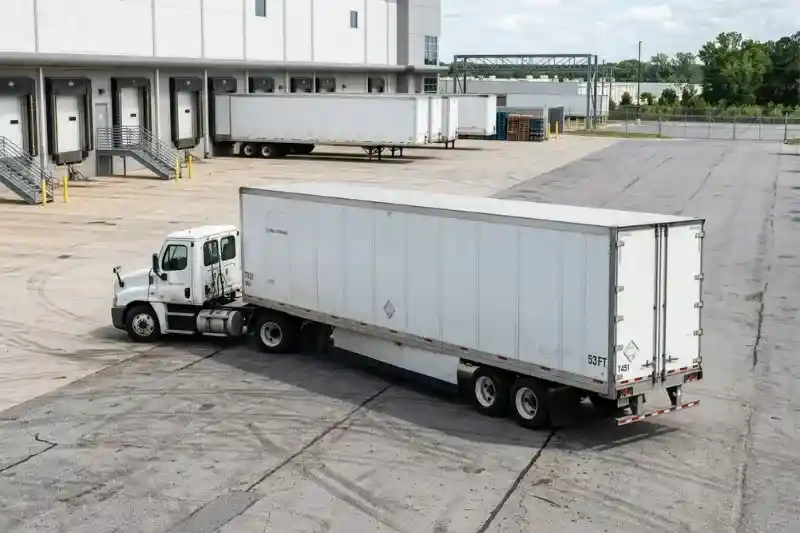
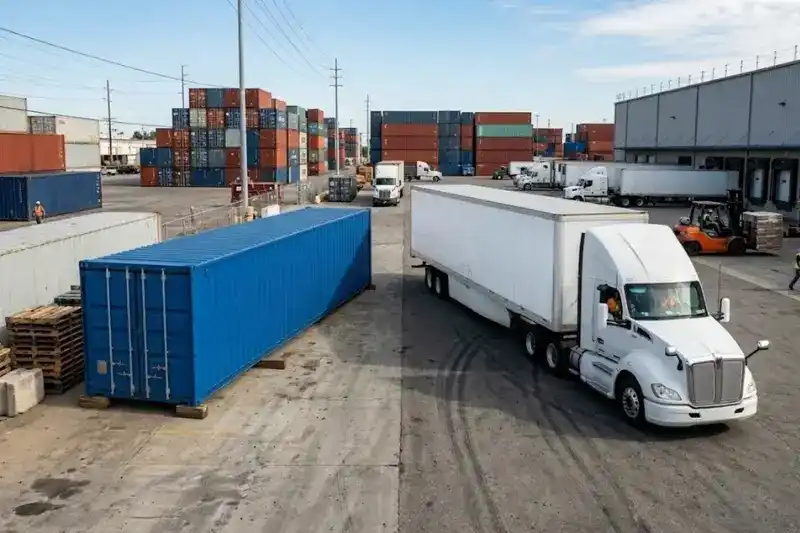
A storage trailer is a mobile, heavy-duty, weatherproof semi-trailer (typically 28 to 53 feet long) used for secure, temporary, or semi-permanent on-site storage of goods. These units attach to semi-trucks or pickup trucks via standard hitch systems, allowing them to travel on highways as mobile storage units. The trailer remains attached to its wheels throughout its service life, unlike shipping containers that can be lifted off transport equipment.
Storage trailers come in several configurations.
- Dry vans are the most common and have fully enclosed trailers with rear doors that protect cargo from the weather.
- Refrigerated trailers add cooling systems for temperature-sensitive goods.
- Flatbed trailers provide open platforms for oversized cargo that doesn’t need an enclosure.
Their construction typically uses aluminum or steel panels over a metal frame, balancing durability with weight restrictions for road transport.
Where are storage trailers typically used?
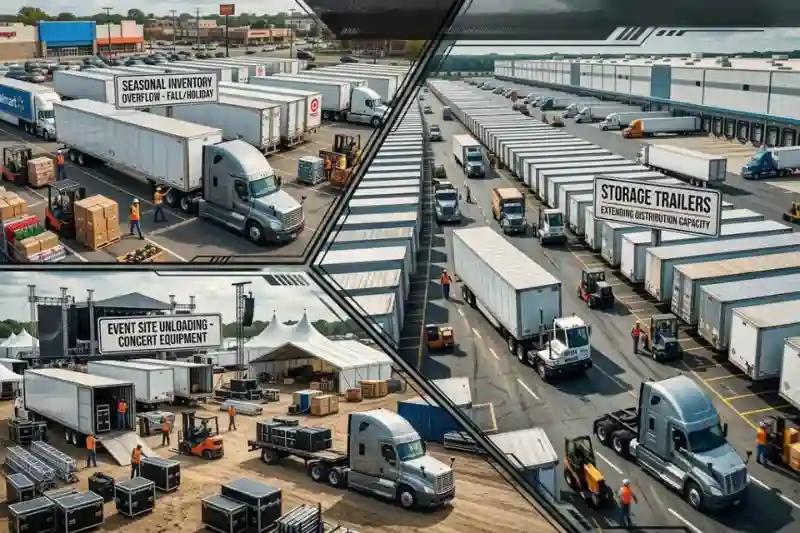
Trailer storage is widely used by logistics companies, retail operations, and businesses that require mobile inventory. The key advantage of trailer storage is immediate mobility. A semi-trailer can be hooked to a truck and moved within minutes, making trailers ideal for operations where storage locations change frequently.
- When seasonal demand spikes, retailers use storage trailers for overflow merchandise that doesn’t fit in their warehouses.
- Distribution centers park trailers on-site to extend storage capacity without building permanent structures.
- Event companies transport equipment in trailers that double as on-site storage during events.
However, this mobility comes with trade-offs in security, maintenance requirements, and long-term cost efficiency compared to stationary storage containers.
What is a shipping Container?
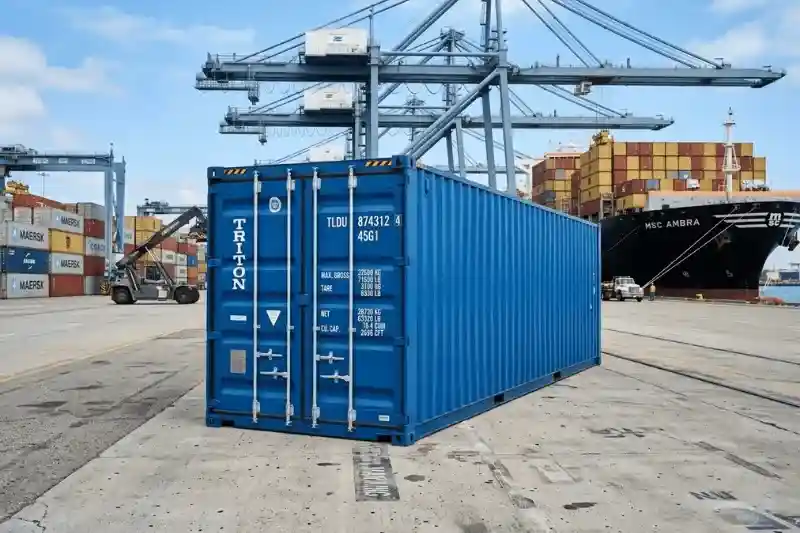
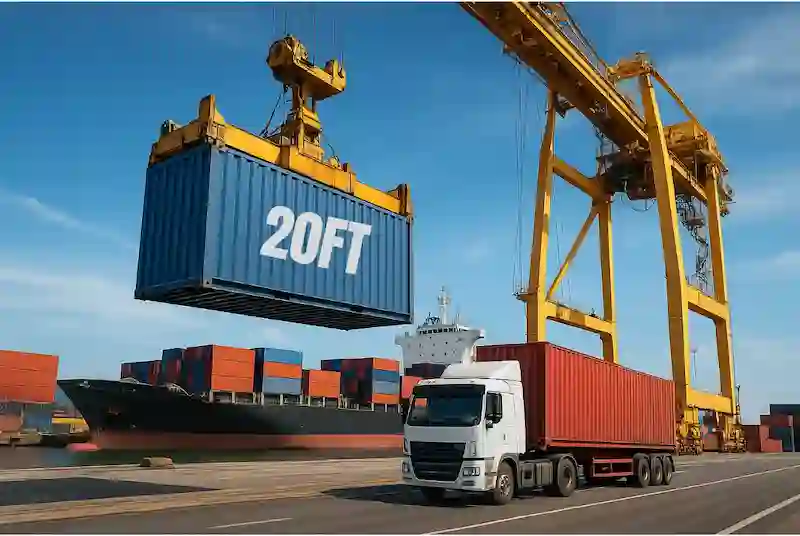
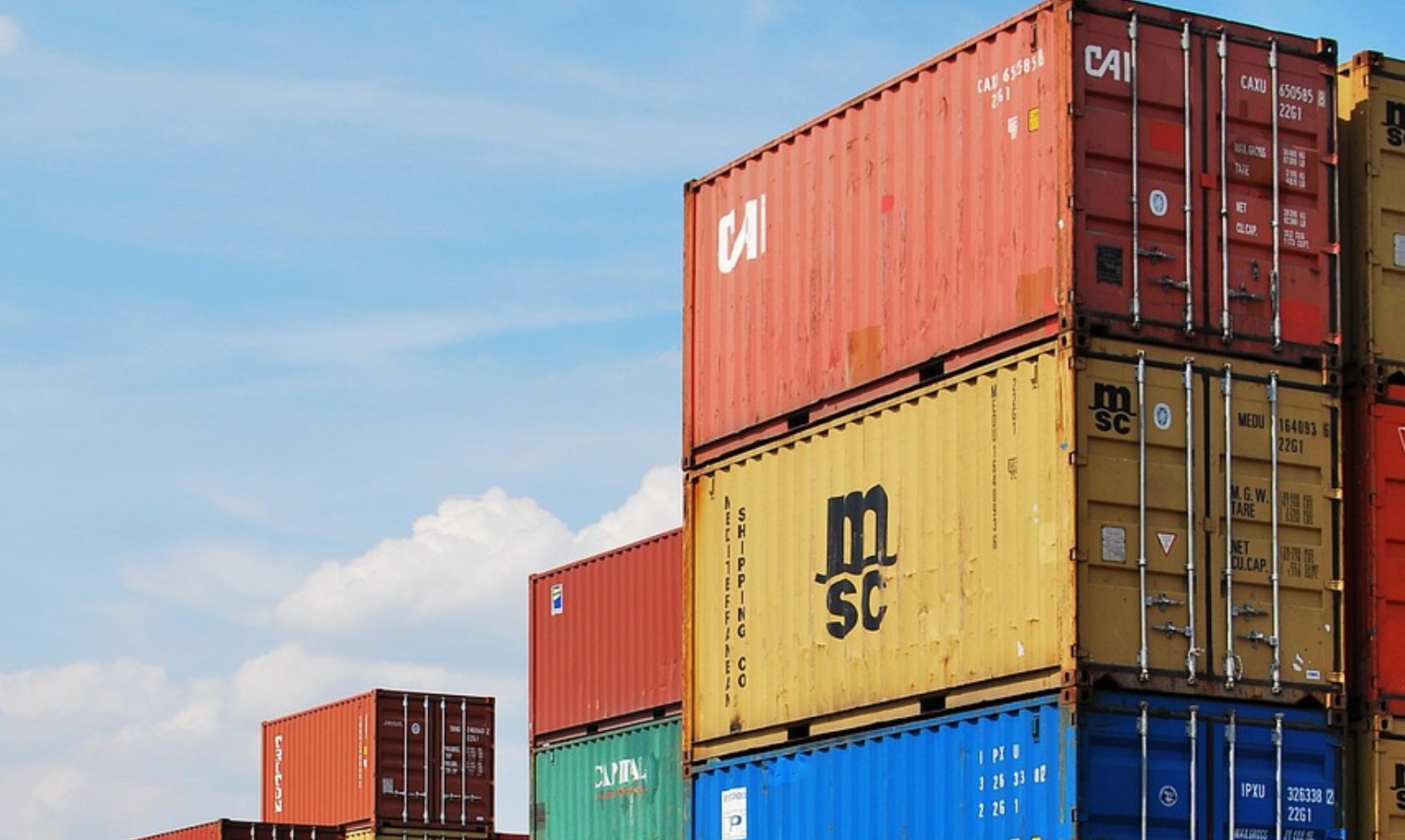
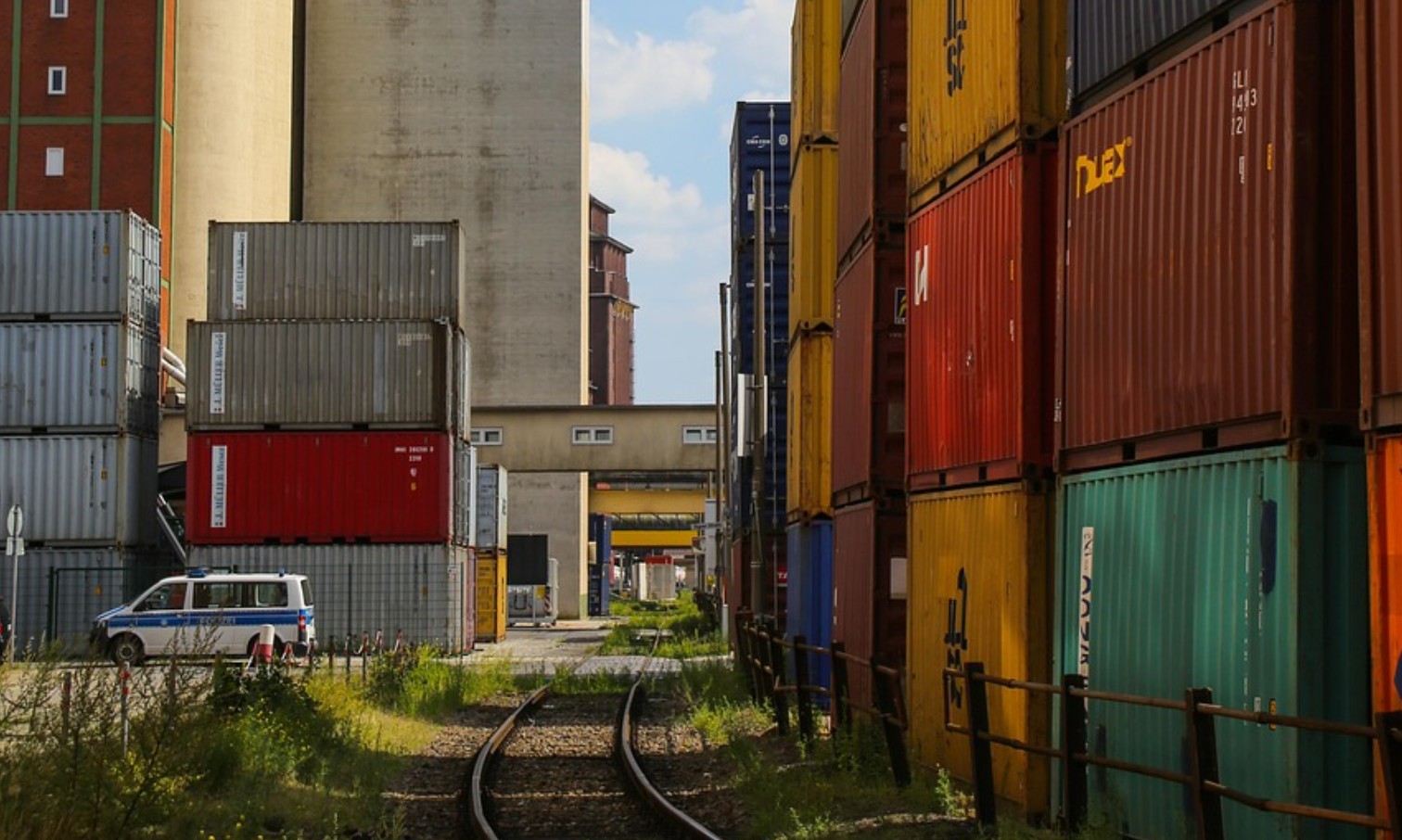
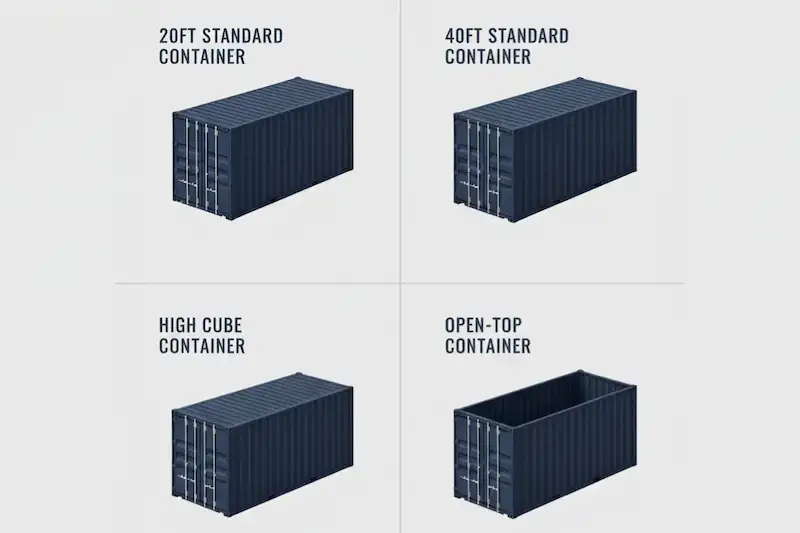
A shipping container is a standardized, reusable steel box designed for the secure storage and efficient intermodal transport of goods via ship, rail, or truck. The most common sizes are standard 20ft and 40ft containers, with specialized variants such as high-cube containers, which provide an extra foot of interior height, and refrigerated containers equipped with cooling systems.
Built with corten steel, shipping containers can withstand stacking, ocean transport, and decades of use in varying climates, making them suitable for both transport and long-term storage applications. They last 20 to 25 years or longer with minimal maintenance.
Where are Storage Containers Typically Used?
A storage container is typically used for secure on-site storage at construction sites, businesses, and residential properties, as well as for transporting goods by ship, train, and truck.
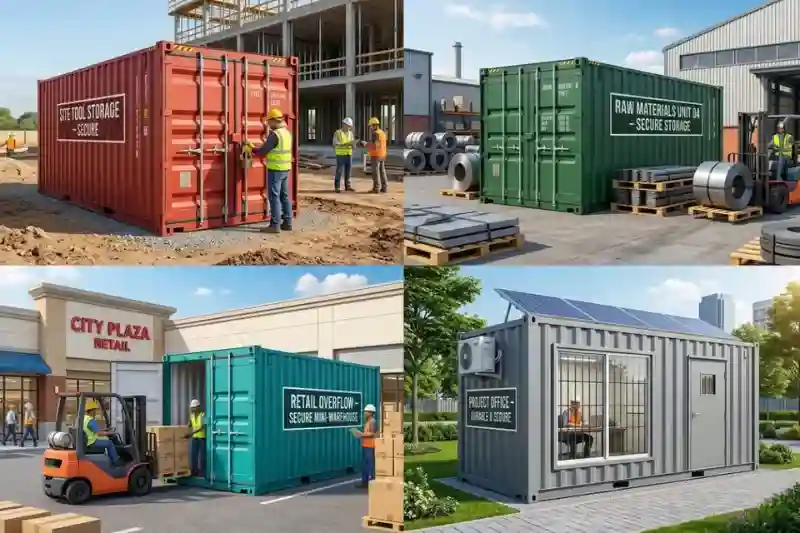
- Construction sites rely on containers for tool storage, protecting equipment from theft and weather between work shifts.
- Manufacturing operations store raw materials, finished goods, and spare parts in containers placed near production lines.
- Retail businesses use containers as overflow storage during peak seasons or as permanent inventory warehouses.
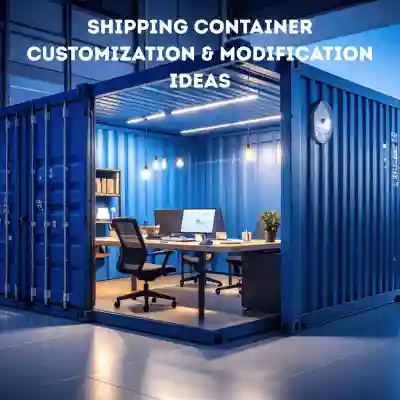
- Some container owners also modify containers as temporary offices, providing climate-controlled workspace on construction sites or at remote locations.
The durability of shipping containers and their steel structure allows them to be used as storage units for years with minimal maintenance.
But let’s understand the difference between trailers and shipping containers so you can make an informed choice based on your requirements.
Comparing Shipping Container vs Trailer
Storge trailers and shipping containers differ in terms of durability (containers are more durable), protection (containers provide better security), mobility (trailers offer greater flexibility for relocation), and regulations (trailers are treated as vehicles, while containers are treated as structures).
Longevity and Durability of Shipping Container vs Trailer
The durability of shipping containers significantly exceeds that of storage trailers due to fundamental differences in construction materials and design purpose.
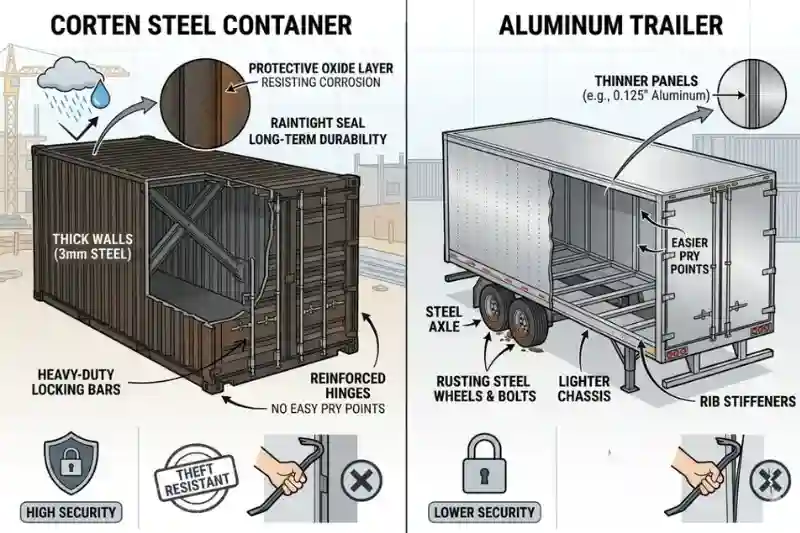
A storage container is built from corten steel, which resists corrosion through its unique weathering properties.
- The steel develops a protective oxide layer when exposed to moisture and air, which prevents rust from penetrating deeper into the material.
- This self-protecting characteristic allows containers to sit outdoors in harsh weather conditions for years.
Storage trailers use lighter construction materials optimized for weight efficiency during road transport.
- Aluminum panels are common because they reduce overall trailer weight, allowing for higher cargo capacity within legal road weight limits.
- While aluminum resists rust, it dents and deforms more easily than steel. The thinner wall panels provide adequate protection during normal use but lack the impact resistance of container walls.
The other option is using steel trailers. While they offer better durability than aluminum models, they still don’t match the durability of container construction. Trailer steel is thinner and uses different alloys than corten steel, making it more susceptible to rust and corrosion.
If you’re planning for the long term, a storage container is the better choice. A container purchased today will likely remain functional for two decades with basic maintenance. A trailer might need replacement after 12 to 15 years, effectively doubling your equipment costs over the same period.
Protection Against Theft and Security: Shipping Container vs Trailer
A storage container provides more secure storage than trailers because of its steel construction and reinforced locking systems. Businesses that store valuable equipment, tools, or inventory often prefer containers as they are difficult to break into.
- Container doors use heavy-duty locking bars that span the entire width of the door.
- These bars connect to locking pockets built into the container frame, creating multiple lock points that resist prying.
- The hinges are welded directly to the structure, making them difficult to remove.
- Lockbox modifications can further increase security by enclosing the padlock in a steel housing that prevents access with bolt cutters.
The corrugated steel walls of containers also resist cutting, drilling, and forced entry better than those of trailers.
Storage trailers, on the other hand, provide moderate protection suitable for general cargo. Their doors lock using standard trailer mechanisms that protect against casual tampering, but the lighter aluminum construction is easier to cut or pry open than steel container walls.
Trailers also present a mobility risk. Because they sit on wheels, a thief could potentially hitch the unit to a truck and tow it away. Containers remain stationary once placed unless specialized equipment is used to move them.
For long-term storage of valuable equipment or inventory, containers offer stronger theft protection and more reliable security than trailers.
Mobility and Relocation Simplicity: Storage Container vs Trailer
Trailers work best when mobility and road transport are most important. Their wheel assemblies and hitch systems allow drivers to connect them to trucks and relocate them quickly.
Trailers are suitable for businesses that move storage between job sites, warehouses, or distribution centers often.
That’s because a storage trailer can be connected to a truck and moved within minutes. It requires no specialized lifting equipment and travels on highways like standard freight.
Shipping containers require more effort to relocate.
Moving a container usually requires cranes, forklifts, or flatbed trucks. You may need to rent this equipment or hire transport services, which increases cost and coordination time.
Storage Container vs Trailer: Extended Storage
For long-term storage, shipping containers are the better choice because they cost less, last longer, and require far less maintenance than trailers.
We’ll show you a detailed cost comparison of both in the next section, but to sum it up, using and maintaining a trailer costs up to four times more than a shipping container.
Durability also favors containers. Built from heavy steel, they maintain structural integrity for decades. A container placed on prepared ground will often look nearly the same after several years, with only normal weathering. Doors continue functioning properly, and the structure remains weatherproof with minimal upkeep.
Trailers deteriorate faster when left stationary. Tires crack or develop flat spots, brake systems can seize, suspension components rust, and seals dry out, allowing water intrusion. After years of sitting unused, a trailer may require expensive repairs before it can safely return to the road.
Containers also provide stronger long‑term security and require only basic annual maintenance, while trailers demand ongoing mechanical servicing. For storage lasting a year or longer, containers deliver significantly better value.
Storage Container vs Trailer: Regulations, Zoning, and Permits
Regulations for trailers and containers differ because trailers are treated as vehicles, while containers are regulated as structures or storage units. Understanding these rules helps you avoid fines or relocation issues.
Storage trailers must follow road transport regulations, including:
- Valid registration and periodic safety inspections
- Compliance with highway weight, height, and width limits
- Parking rules that may restrict trailers in residential areas or limit parking duration
Many cities restrict commercial trailer parking in residential neighborhoods or allow it only for short periods, such as 24–48 hours.
Shipping containers fall under local zoning and building regulations instead of vehicle laws. In many areas, containers count as temporary storage units if they remain movable and are not attached to permanent foundations. However, some municipalities may require:
- Setbacks from property lines
- Screening from public view
- Restrictions in residential zones
Modified containers used as offices or living spaces usually require building permits and must meet local building codes.
Homeowner associations may also regulate both trailers and containers. Always check local zoning rules, HOA policies, and permit requirements before placing a storage unit on your property.
Cost Comparison: Trailer vs. Container
Purchase costs vary significantly between trailers and containers, with containers generally offering better value for long-term storage applications.
| Cost Factor | Shipping Containers | Storage Trailers |
| Purchase Price (Used) | $1,500 – $4,500 depending on size | $8,000 – $15,000 |
| Purchase Price (New) | $3,500 – $8,500 | $25,000 – $40,000+ |
| Monthly Rental | $100 – $200 | $200 – $500 |
| Annual Maintenance | $100 – $300 | $500 – $1,500 |
| Typical Lifespan | 20 – 25 years | 10 – 15 years |
Cost:
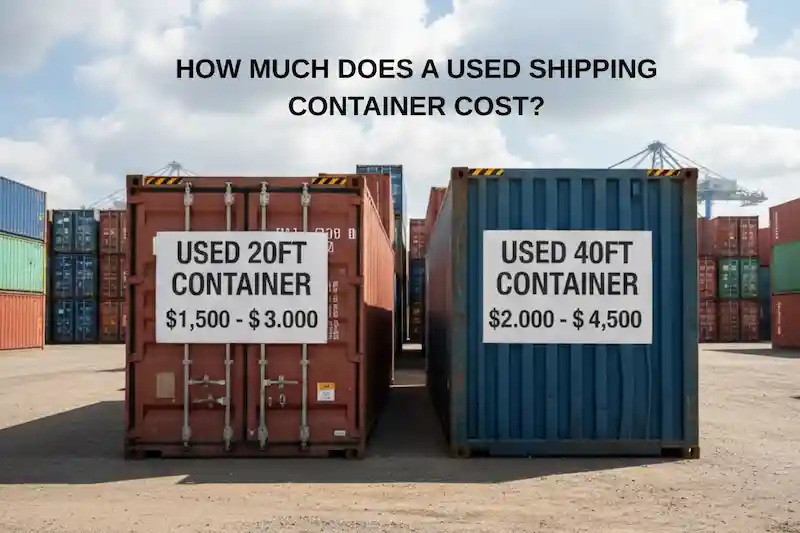
A used 20ft shipping container in good condition typically costs $1,500 to $3,000, while a new one costs $3,500 to $5,000. A 40ft container costs $2,500 to $4,500 used and $6,000 to $8,500 new.
Storage trailers cost more upfront. A used dry van trailer runs $8,000 to $15,000, depending on age and condition, while new trailers cost $25,000 to $40,000 or more.
Rental costs:
Using a shipping container for storage ranges from $100 to $200 per month for standard units. Trailer rental costs $200 to $500 per month.
Over a year, the rental cost difference can exceed the purchase price of a used container, making container purchase economical for long-term storage needs.
Maintenance costs:
Containers require minimal maintenance, such as occasional roof inspections, door lubrication, and minor rust treatment. Annual maintenance might cost $100 to $300 in materials and labor if you handle it yourself, or slightly more if you hire professionals.
Trailers need frequent maintenance even when used primarily for storage. Annual trailer maintenance easily runs $500 to $1,500, with major repairs potentially costing several thousand dollars.
Let’s understand maintenance costs in more detail below.
Requirements for Maintenance for Container vs Trailer
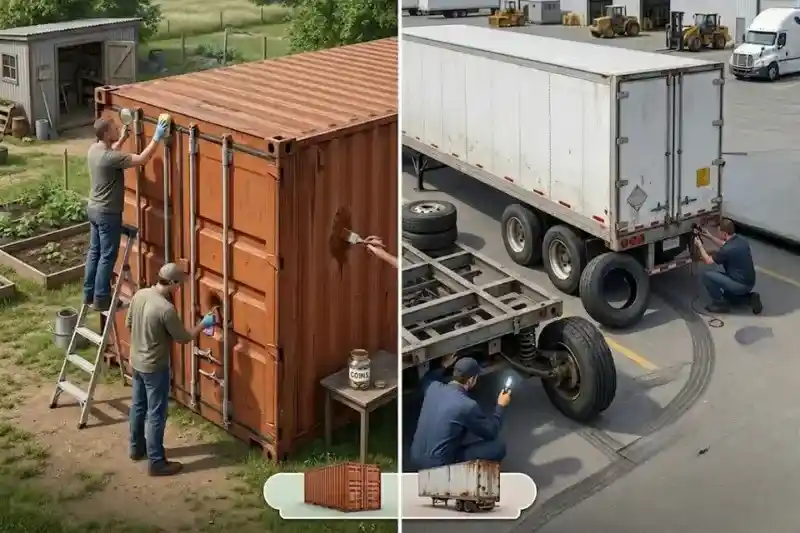
The maintenance contrast between containers and trailers significantly impacts long-term ownership costs and operational convenience. Containers require minimal maintenance, while trailers require regular mechanical upkeep typical of any road vehicle.
Shipping containers need basic upkeep that most property owners can handle themselves.
- Annual roof inspections check for water pooling or damage that might compromise waterproofing.
- Door hinges benefit from periodic lubrication to ensure smooth operation.
- Surface rust can be treated with rust converter and paint if it develops beyond the normal corten steel patina.
These tasks require minimal tools and take just a few hours per year.
But storage trailers demand frequent maintenance because they incorporate all the mechanical systems of a road vehicle.
- Tires deteriorate from sun exposure and age, requiring replacement every few years at $500 to $1,500 per set.
- Wheel bearings need periodic greasing, brakes require inspection and service, and lights must be maintained to meet road compliance requirements.
- Suspension components wear out and need replacement.
- Registration and inspection requirements add to trailer maintenance burden in many jurisdictions. Trailers used on public roads must maintain current registration and pass periodic safety inspections.
Annual trailer maintenance easily reaches $500 to $1,500, with major repair years potentially costing several thousand dollars.
When you factor in purchase price, maintenance, and container lifespan, containers provide superior cost efficiency for long-term storage. A container might last 25 years with minimal upkeep, while a trailer typically needs replacement after 15 years and costs more to maintain throughout its service life.
But despite containers’ advantages in many storage scenarios, there are also some use cases where a trailer is the better choice. Read on to know more.
When a Trailer Is a Better Option?
A trailer is a better option for logistics operations requiring frequent movement, road transport, or temporary storage.
- Frequent movement: If your storage unit must relocate weekly or monthly to follow changing inventory needs, distribution patterns, or project sites, the mobility advantage of trailers justifies their higher costs and maintenance requirements.
- Road transport: Trailers are best when the same unit needs to transport goods and temporarily store them. Companies that receive shipments in trailers, store them temporarily, then forward them to other locations, benefit from using the trailer continuously rather than unloading into separate storage. This approach reduces handling costs and keeps products in a sealed environment throughout the supply chain.
- Short-term storage needs: If you need temporary storage, say a few weeks or months, during a business relocation, facility renovation, or seasonal inventory surge, renting a trailer for the specific period often costs less than arranging a container delivery.
In these scenarios, it makes more sense to use a trailer rather than a shipping container. But for everything else, shipping containers remain a better choice.
When It’s Better to Use a Shipping Container
Shipping containers excel in applications where storage units remain in one location for extended periods. They’re also a better choice for security and cost savings.
-
- Long-term storage: Containers are designed to last decades. Built from corten steel and originally engineered for ocean transport, they withstand constant outdoor exposure and heavy use. If you need long-term storage of your goods that lasts months or years, containers maintain their structural integrity far longer than trailers.
- Static locations: If you need to store your cargo at a static location such as a yard, facility, or job site, containers are the best choice. Once safely placed, they function as stable storage units without the mechanical wear associated with wheels, axles, and suspension systems.
- Security: The steel walls, reinforced doors, and locking bar systems provide highly secure storage. Breaking into a container requires significant effort and specialized tools, which helps protect equipment, inventory, and other valuable assets.
- Cost savings: Finally, the most crucial factor making shipping containers a better choice is their cost-effectiveness. Containers typically cost far less to purchase and maintain than trailers. They require minimal maintenance and have a longer service life, which lowers total ownership costs over time.
Because of these advantages, containers often provide the most practical solution for stationary storage that needs to remain secure and reliable for years. But the key is to purchase them from a reliable supplier at the right prices.
Why Companies Select Pelican Containers for Shipping Containers
Pelican Containers provides shipping containers for businesses and individuals needing reliable storage solutions or for intermodal transport. Our container selection includes standard 20ft and 40ft shipping containers, high-cube containers, and specialized containers for specific storage needs.
Every container in our inventory undergoes a thorough check to ensure it’s in good condition and ready to provide reliable years of storage use.
We provide nationwide delivery and can place containers at your location regardless of where your business or property is situated. Our delivery network includes experienced drivers and appropriate equipment for different site conditions. We coordinate delivery timing with your schedule and provide site preparation guidelines to ensure smooth placement.
Our quotes are fully transparent and include the container cost, delivery to your location, and any required placement services. We explain what’s included so you understand the total investment before committing. For current shipping container pricing and availability, our team provides detailed information tailored to your specific needs.
If you’re looking for a secure and cost‑effective storage solution, explore our range of shipping containers designed for long‑term storage and stationary use. Our team can help you choose the right size and type based on your location, budget, and storage needs.
Learn more about Pelican Containers or request a quote to get the right container delivered to your site.
Vatsala Singh is a B2B content strategist and writer specializing in the shipping, logistics, and container industry. She has written extensively about container types, container modifications, procurement challenges, and the market shifts that influence container demand.
With a Master’s degree in English Literature and strong research skills, she brings depth, clarity, and accuracy to every article. Through her content, she combines industry knowledge with practical insight, helping readers understand what’s happening in global trade and how it affects container buyers, freight forwarders, and equipment managers.
When she’s not writing, Vatsala is usually reading fiction, exploring new ideas, or learning about how different industries work.
She believes that good content should simplify complexity, support smarter decisions, and make the container world easier to navigate, one article at a time.
Vatsala Singh is a B2B content strategist and writer specializing in the shipping, logistics, and container industry. She has written extensively about container types, container modifications, procurement challenges, and the market shifts that influence container demand.
With a Master’s degree in English Literature and strong research skills, she brings depth, clarity, and accuracy to every article. Through her content, she combines industry knowledge with practical insight, helping readers understand what’s happening in global trade and how it affects container buyers, freight forwarders, and equipment managers.
When she’s not writing, Vatsala is usually reading fiction, exploring new ideas, or learning about how different industries work.
She believes that good content should simplify complexity, support smarter decisions, and make the container world easier to navigate, one article at a time.
Frequently Asked Questions
What is the difference between a trailer and a container?
The key difference between a trailer and a container is that a trailer is built for road transport and mobility, sits on wheels, and is designed to move cargo frequently between locations. A shipping container is a steel storage unit designed for durability, security, and long‑term stationary storage.
How long can a shipping container be used for storage?
Shipping containers can last 20–25 years or more when used for stationary storage. Because they are built from heavy corten steel and engineered for ocean transport, they can withstand harsh weather conditions with minimal maintenance.
Is it cheaper to buy a shipping container or rent a storage trailer?
In most long‑term scenarios, buying a shipping container is significantly cheaper. Containers have lower purchase prices and minimal maintenance costs, while trailers incur higher rental fees and ongoing mechanical upkeep, including tires, brakes, and suspension systems.
Do I need a permit to place a shipping container on my property?
Permit requirements depend on local zoning regulations. Some areas permit containers for temporary storage without permits, while others require setbacks, screening, or placement approvals. Checking local zoning rules before delivery helps avoid compliance issues.
How do I choose between a trailer and a shipping container for storage?
The choice depends on how you plan to use the storage unit. Trailers work best for short-term storage or when you require frequent road transport. Shipping containers are the better option when you need secure, durable, and cost‑effective storage that will remain in one location for an extended period.