Shipping Container Organization Ideas to Maximize Space & Efficiency


Shipping containers offer strong, secure, and flexible storage solutions, but without a proper storage plan, that space fills up fast and becomes difficult to use. The right container storage solutions help you avoid clutter and make better use of every part of the container.
Whether you’re setting up a storage container for tools, inventory, or equipment, the way you organize a shipping container determines how useful it will actually be.
In this guide, we’ll cover practical shipping container organization ideas for every container size and use case, along with the accessories that make the biggest difference. By the end, you’ll have a complete understanding of different shipping container organization ideas.
Key shipping container organization ideas:
|
The Importance of Organizing Shipping Containers
Organizing shipping containers keeps your cargo safe while ensuring you can access your goods anytime without having to remove all the other items.
Here are some of the most common problems proper organization solves:
- Items stacked on the floor in front of other items
- Vertical space left completely unused
- A layout that requires moving half the container’s contents to reach anything stored toward the back.
Poor shipping container organization also creates safety risks as overloaded floor areas or blocked door clearance pose a risk of injuries and damage to the cargo and to you.
For business inventory or commercial storage, disorganization directly affects how long it takes to load, unload, and locate materials within the container, which ultimately leads to lost time and reduced productivity.
Getting the organization right before you start loading the container saves significant rework later and protects stored goods.
Fundamentals of Shipping Container Organization
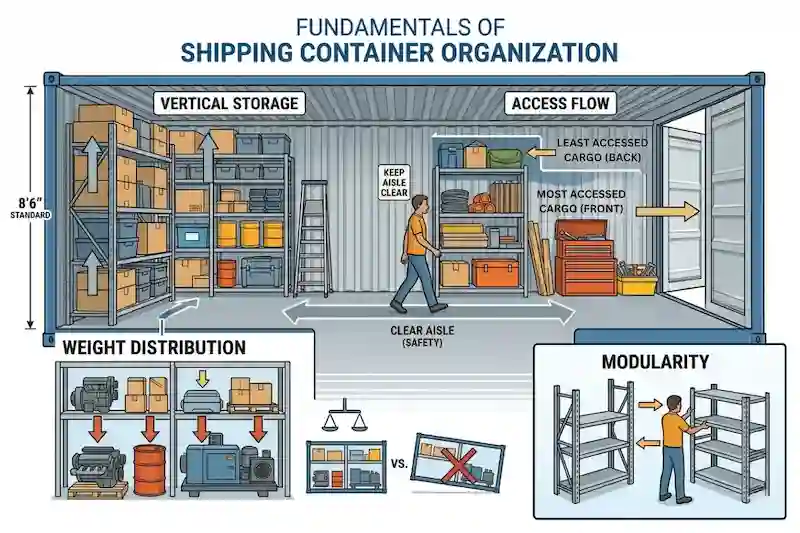
The same shipping container storage basics apply if you’re using standard containers. These units have fixed walls, a single entry point, and limited floor space, which means access, weight, and space must be planned before you add anything inside.
Here are a few shipping container storage ideas to pay attention to:
- Vertical storage first: The walls of a shipping container extend to 8’6″ on a standard unit and 9’6″ on a high cube. Using this vertical space correctly is one of the most effective ways to increase usable capacity.
- Weight distribution: The weight of your cargo should be distributed evenly in the container. A few tips to maintain the center of gravity and reduce container damage to the floor include putting heavy items on the floor or lower shelves.
- Access flow: Plan which cargo you’ll need most often and position it closest to the doors. Items accessed rarely can be placed in the back and upper positions. A container with a logical access flow means you don’t have to move things out of the way every time you retrieve something.
- Modularity: Storage container organization works best when it can be adjusted. Using freestanding shelving systems or modular racks can increase your storage space without requiring expensive structural modifications to the container.
- Safety clearance: Always maintain clear access to the doors and leave an aisle inside the container wide enough to move through safely. In a container used for inventory organization, a clear pathway can significantly reduce the risk of accidents.
Keeping these basics in mind will make shipping container storage way easier for you, regardless of the type of container you choose. Now, let’s understand specific shipping container storage ideas in detail.
Shipping Container Shelving Ideas
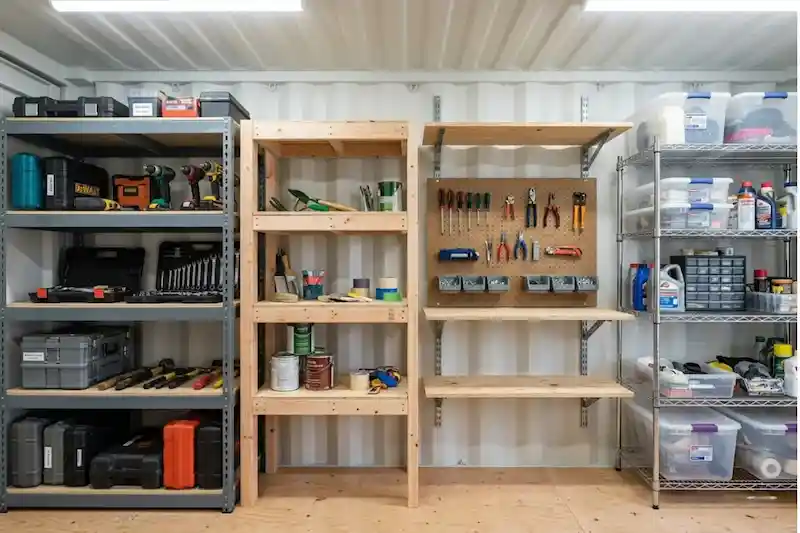
Container shelving is the foundation of any organized storage setup. It allows you to use vertical storage space, separate items, and improve access without increasing clutter. Using the right storage container shelving can keep your cargo organized while making the most of the available container space.
There are multiple container shelving options to choose from, like metal shelving, wooden Shelving, or wall-mounted shelving systems. The right choice depends on what type of cargo you’re storing, its weight, and whether you need permanent modifications to the container.
Choosing practical container storage solutions at this stage makes the rest of the setup easier to manage and adjust over time.
Sturdy Metal Storage Container Shelving
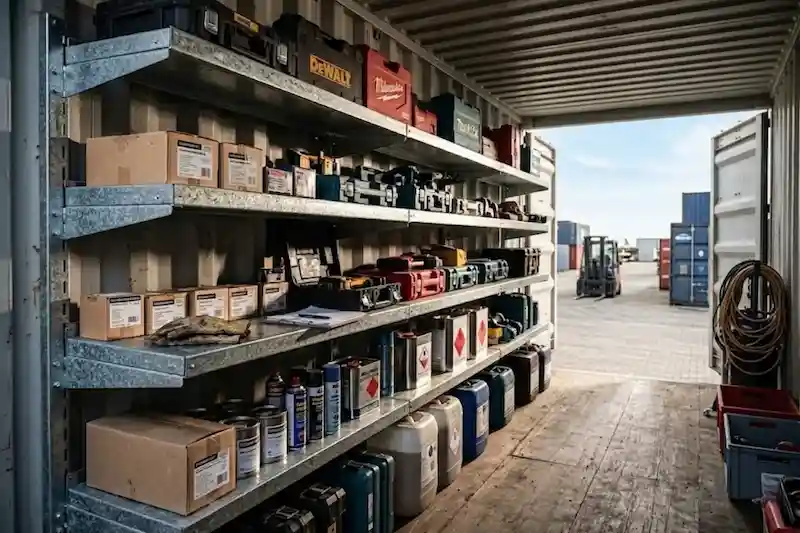
If you require container storage in heavy-duty environments, such as construction sites and industrial storage, this is the best choice.
- Supports heavy loads: Metal shelves handle heavier loads like tools and equipment better than wood or plastic systems.
- Long-term durability: Metal resists wear, moisture, and impact better.
- Non-permanent installation options: These are available as freestanding or bolted systems, allowing use in rental containers without permanent modifications.
If strength and reliability are priorities for your storage setup, choose this type of container shelving.
DIY Wooden Shelving for Shipping Containers
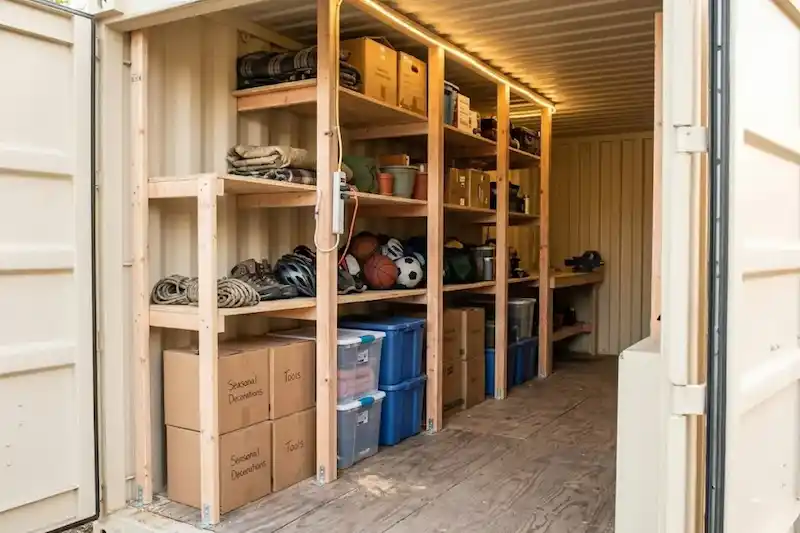
Installing wooden shelves for shipping containers is affordable for lighter cargo and can be used effectively for storing household items, sports equipment, or seasonal items.
Most container owners use 2×4 lumber and plywood for shelving because it’s straightforward and lets you customize shelf depth, height, and spacing to fit exactly what you’re storing.
The key to making DIY wooden shelving work is to anchor it correctly.
- As the walls of containers are made of corrugated metal, they can’t withstand the pressure of wall-mounted brackets.
- Wooden shelves should therefore be mounted on the floor with lag screws or freestanding frames that can be mounted against the load-bearing areas of the container.
This approach keeps the shelving stable without compromising the container’s structure.
Hanging & Wall-Mounted Shelving Systems
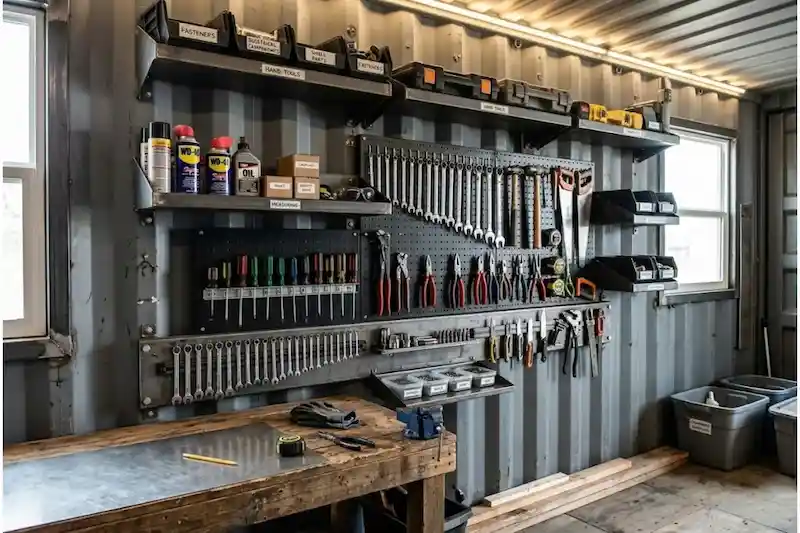
Wall-mounted systems maximize wall storage without consuming floor space. Here’s how.
- Uses vertical storage space: Mounting shelves along container walls frees up central container space.
- Improves airflow: Items stored off the floor reduce moisture buildup and support ventilation.
- Safer storage for lighter items: Ideal for tools, small parts, and for storing items you’ll use frequently.
These systems make it easier to access items and improve floor space optimization. Just make sure any wall storage is secured to the container’s frame, not the corrugated metal panels.
Use the vertical posts and horizontal beams as anchor points. They’re strong enough to support things like hanging racks, magnetic strips, or pegboards mounted on backing boards.
Wire rack shelving that stands alone
Freestanding wire rack shelving units are the most portable and flexible option for shipping container storage. They require no anchoring, can be repositioned in minutes, and work particularly well in container offices, document storage setups, and any application where the inventory or contents change regularly.
Wire racks let air circulate stored items, reducing the risk of moisture buildup on shelves holding cardboard boxes or fabric items.
| Also read: How to Start Your Own Shipping Container Self-Storage Business: Step-by-Step Guide |
How to Organize a 20ft Shipping Container
A 20-foot shipping container gives you roughly 160 sq ft of floor space. This is why you should be organized here.
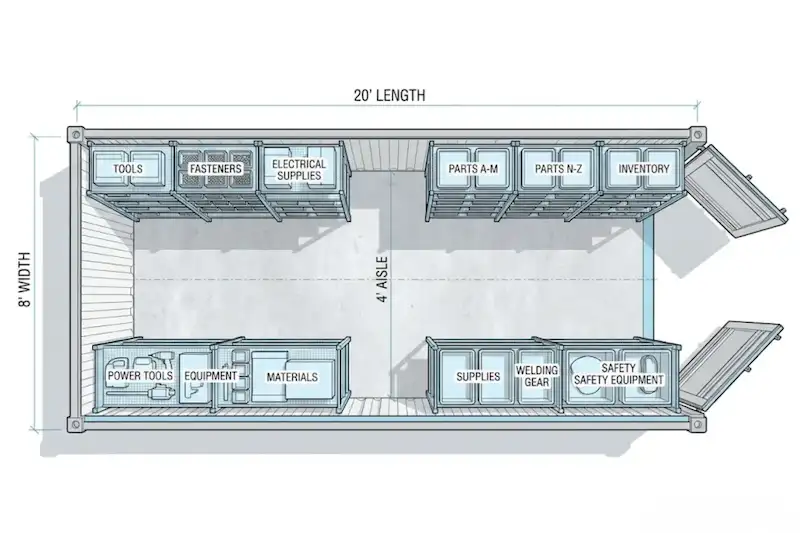
- Shelving against the walls: Organizing a 20ft shipping container efficiently requires keeping all your shelving against the walls, leaving the middle aisle clear from the door to the end wall. This maximizes floor space optimization and allows you to access items stored anywhere in the container without moving other things first.
- Control shelf depth: If you are placing shelves extending up to 18-24 inches from the wall, you will have an aisle measuring about 4 to 5 feet, allowing you to move around without too many issues.
- Use vertical space where safe: Especially useful in smaller containers, vertical shelving from floor to ceiling helps you accommodate a lot more inside your container. Just make it a point to clearly label shelves and bins, as this will help you identify items easily without pulling everything down to find what you’re looking for.
- Accessibility should come first: When organizing your container, do remember to always keep the most frequently accessed products next to the door.
Also see: How Much Furniture Can Fit in a 20 Foot Shipping Container?
40-foot and high cube container organization ideas
A 40ft container provides double the space as compared to a 20ft container. This means you can add more shelving along the walls and create a central shelving row as well.
Similarly, high cube containers offer an additional one foot of height, offering additional space for ceiling storage. You can add shelving from the floor to the roof and store items like pipe racks on the top shelf.
The best way to keep everything organized in larger containers like these is to create specific sections for different types of items you’re storing.
Shipping Container Workshop Organization Ideas
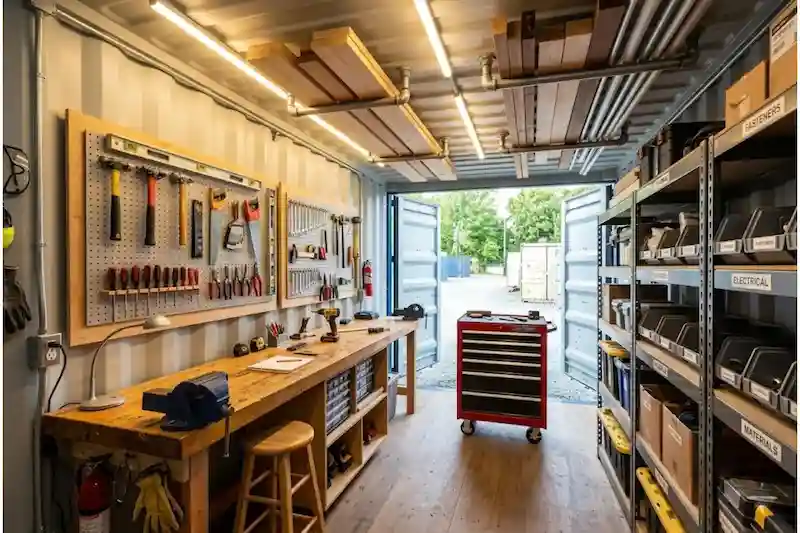
The goal of organizing shipping container workshops is to create a functional workspace where you can access tools, use the surface for work, and move through the container unobstructed.
This includes:
- Pegboards: If you mount pegboards on backing boards and fix them to the container’s frame, you get a really practical way to store hand tools. They stay visible and easy to grab, and you don’t end up cluttering your floor or workbench space.
- Workbenches put along one wall: A fixed workbench running the length of the container wall gives you a work surface and can incorporate storage underneath via drawers or lower shelving.
- Rolling racks: Rolling racks are useful because you can move them around whenever you need to. If you’re working on a bigger project, you can shift them out of the way and bring them back later, which makes the space a lot more flexible than fixed storage.
- Designated zones: Separating the working area from the storage area within the container reduces clutter on work surfaces and improves job site efficiency.
- Ceiling storage for long materials: Overhead brackets and pipe racks along the ceiling work well for lumber, pipe, conduit, and other long materials that are awkward to store on standard shelves
For more modification ideas, read our detailed guide on shipping container customization.
Accessories That Improve Container Organization
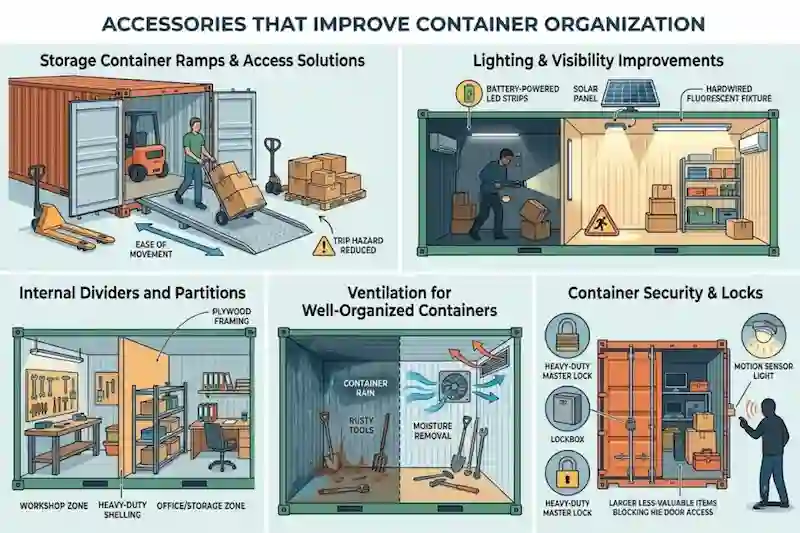
Some accessories that improve storage container organization apart from shelving are using container ramps & access solutions (for easier loading and unloading); lighting equipment (for increased visibility), internal dividers (help with organization), and using container locks for safety.
Storage Container Ramps & Access Solutions
One of the most useful storage accessories you can install is a ramp for moving heavy items in and out of the container.
A ramp will increase access to the container and allow wheeled equipment, pallet jacks, hand trucks, and forklifts to move cargo inside the container. Adding a ramp doesn’t require significant funds, but the return is tenfold. These attach to the container door threshold and create a gradual slope from ground level to the container floor level,
Lighting & Visibility Improvements
Lighting inside a container is extremely crucial for your safety as well as the safety of your cargo.
A container with no lighting will force you to use a flashlight, which will engage your hands and reduce your productivity. You’ll end up spending more time locating the items than actually retrieving them from the container. Here are a few options to choose from:
- Battery-powered LED strip lights and solar-powered LED fixtures are the most common solutions for containers. These don’t require an electrical connection, and you can easily buy them from your local tool store.
- For long-term storage, hardwired fluorescent or LED fixtures mounted to the ceiling give consistent, even lighting across the full interior. These connect to the electrical systems, which reduces your battery consumption in the long run.
Good lighting improves safety by reducing the risk of trips or falls.
Internal dividers and partitions
Adding internal dividers or partitions in your storage container is a great way to separate tools and improve inventory organization. It keeps your items organized, and if you have a bigger container but only require half of it for storage, you can add a partition and use the other half as a workshop or even as an office space.
You can build these partitions from plywood framing or from heavy-duty shelving units positioned perpendicular to the walls as room dividers.
The right approach depends on how permanent you want the division to be and whether the container layout will change over time.
Ventilation for well-organized containers
Ventilation is a practical necessity for any container used for extended storage. Without proper airflow, temperature changes inside the container cause condensation to form on the steel walls and ceiling, which is often referred to as “container rain.”
If left unchecked, this moisture can damage your items, lead to rust on metal tools and equipment, and even accelerate the deterioration of cardboard, wood, and fabric items.
A few tips you can apply:
- Passive vents installed near the top of the container walls allow hot air to escape and create airflow that reduces internal humidity.
- For containers in hot climates or for storing moisture-sensitive materials, active ventilation fans provide more reliable air movement and rust prevention.
| Pro tip: Read the detailed guide on how to keep a shipping container cool if you’re planning to place your storage container in a warm climate. |
Container Security & Locks
Paying attention to container security is also part of effective organization.
Always choose the best shipping container locks for maximum security.
Simply adding a container lockbox can prevent access to the actual lock and increase the security of the container.
For high-value inventory or equipment, additional security layers include alarm systems, motion-activated lighting, and GPS tracking units stored inside the container.
Organizing your container so that high-value items are stored toward the back and away from immediate door access is also a great way to delay theft if the primary lock is ever compromised.
Common Errors in Shipping Container Organization [& How to Avoid Them]
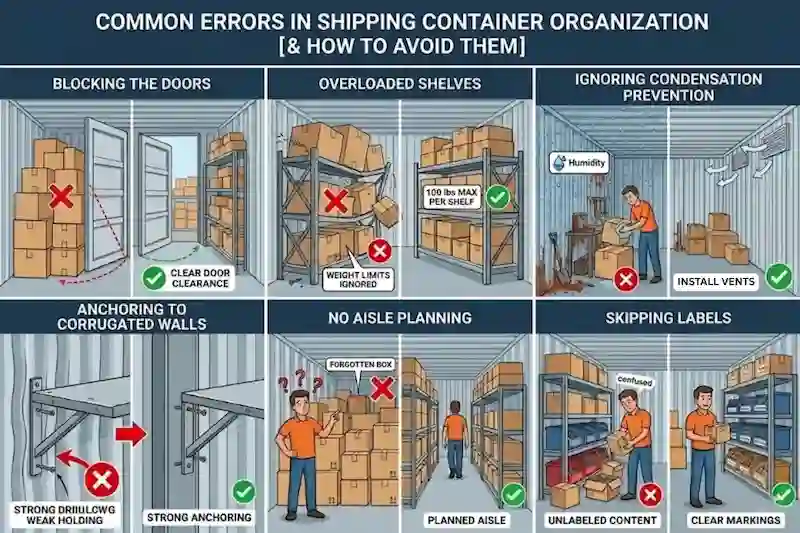
Here are some of the most common mistakes we’ve noticed container owners make when organizing their containers for storage.
- Blocking the doors: Storing items directly behind the door swing area prevents the doors from opening fully, slowing access to stored goods and making them more difficult to reach. Always maintain clear door clearance.
- Overloading shelves: Depending on the shelving you choose, there are certain weight limitations you must keep in mind. Overloading or exceeding that limit can cause the shelving to fall and damage your items in the process.
- Ignoring condensation prevention: Setting up container shelving and filling a container without addressing airflow leads to condensation damage over time, particularly in humid climates. Install vents before the container goes into active storage use.
- Anchoring to corrugated walls: Drilling mounting brackets directly into the corrugated wall panels can compromise the panel and doesn’t provide reliable holding strength. Always anchor to structural members.
- No aisle planning: Filling a container from back to front without planning an access aisle means items at the back can only be reached by removing everything in front of them.
- Skipping labels: Even a well-organized container becomes hard to use if its contents are unlabeled. When shelves, bins, and sections are clearly marked, you can find what you need quickly without having to search through everything each time.
As you can see, these mistakes are easily avoidable with proper planning and can help you store items more efficiently.
Choosing the Right Container for Organized Storage
The container you choose directly affects how easy it is to organize and maintain items over time. Here are a few things to keep in mind to make the right choice.
- Choose size based on use: Shipping container size should match your storage volume. A 20ft container works well for compact setups where items are accessed frequently, and space is limited. A 40ft container gives you more space so you can create zones, add deeper shelving, and store larger quantities without stacking everything tightly.
- Select the right condition: Cargo-worthy containers are a strong middle-ground choice when you need structural reliability for business inventory or regular access. If your main goal is basic storage on a budget, WWT containers are often enough as long as they are sealed and free from leaks.
- Plan delivery and placement: Placement decisions impact how you organize a shipping container later. Positioning the container with clear access to the doors allows you to move items in and out. You also need enough surrounding space for loading, especially if you plan to use ramps or wheeled equipment.
If you’re setting up a long-term organized storage system or converting a container into a workspace, starting with a clean, structurally sound unit makes everything easier.
Pelican Containers offers standard and high cube containers across multiple condition grades. Our team also guides you through the delivery and container placement process so you can start using the container immediately and avoid any future damage.
All our containers are inspected before delivery, and we also provide an exclusive limited warranty to ensure the quality of our units.
Conclusion: Create a Well-Ordered, Effective Container Configuration
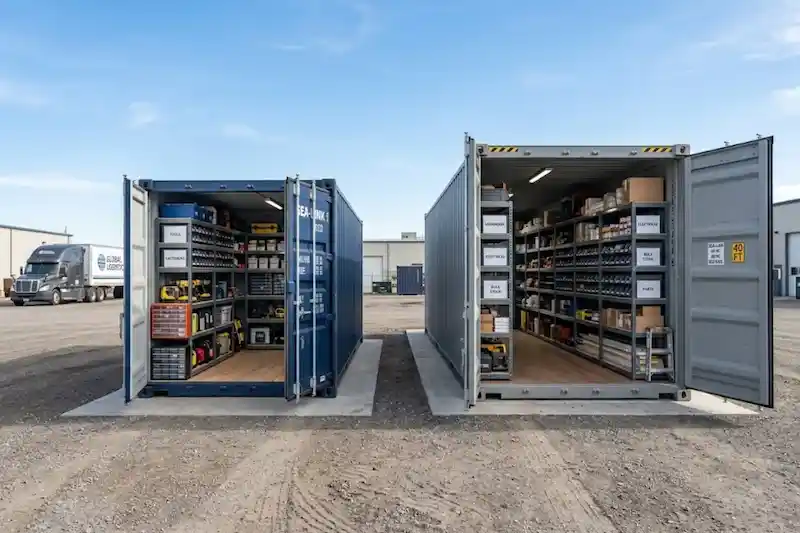
The most effective shipping container organization ideas start with a plan. First, define your use case, then map out your access flow, decide on shelving type, and address ventilation and lighting.
A container set up this way stays organized under daily use and keeps your cargo safe.
Clear labeling and consistent zoning are small steps that make the biggest long-term difference in how usable a container actually is. The right storage accessories, like ramps, lighting, locks, and ventilation, support the organization system even more.
If you’re buying a container for organized storage or a functional workspace, Pelican Containers can help you choose the right size and condition for the job and coordinate delivery to your site.
Request a custom quote from our team to get guidance on the best container type for your specific storage needs.
Vatsala Singh is a B2B content strategist and writer specializing in the shipping, logistics, and container industry. She has written extensively about container types, container modifications, procurement challenges, and the market shifts that influence container demand.
With a Master’s degree in English Literature and strong research skills, she brings depth, clarity, and accuracy to every article. Through her content, she combines industry knowledge with practical insight, helping readers understand what’s happening in global trade and how it affects container buyers, freight forwarders, and equipment managers.
When she’s not writing, Vatsala is usually reading fiction, exploring new ideas, or learning about how different industries work.
She believes that good content should simplify complexity, support smarter decisions, and make the container world easier to navigate, one article at a time.
FAQ: Shipping Container Organization Ideas
How do I anchor shelving inside a shipping container without damaging the walls?
Attach shelves to strong parts of the container, like the corner posts, floor frame, or top rail, instead of the thin wall panels. The walls are not built to hold weight and can fail over time. If you want to avoid drilling, use freestanding shelves and brace them against these strong points so they stay stable.
Can I drill into a shipping container wall to mount accessories?
You can drill into the container walls for light items like hooks or pegboards. However, the walls are thin and cannot hold a heavy weight. For shelves, tool racks, or anything heavy, secure them to the strong parts of the container, such as the ribs and cross members. These parts are built to handle weight and will keep your setup safe.
How much weight can shipping container shelves hold?
The weight limit depends entirely on the shelving system, not the container itself. Light-duty wire racks typically hold 200–400 lbs per shelf. Industrial steel shelving can handle 800 lbs or more per shelf when properly assembled and anchored. Always check the manufacturer’s rated capacity for the specific shelving unit you’re using.
What's the best way to prevent moisture damage in a storage container?
The best way to prevent moisture damage in a storage container is to install passive or active ventilation to reduce interior humidity. Use shelving to keep items off the floor and away from the walls, which are the primary condensation surfaces. Desiccant packets or dehumidifier units help in humid climates or containers storing particularly moisture-sensitive materials.
Is a 20ft or 40ft container better for organized storage?
It depends on the volume of items you store and your site constraints. A 20-foot shipping container works well for focused storage with a clear organization plan. A 40ft unit offers greater layout flexibility and is well-suited to larger inventory or workshop setups. If your storage needs are likely to grow, starting with a 40ft container avoids the need to transition later.
How do I organize a shipping container for business inventory?
To organize a shipping container for business inventory, zone the container by product category or SKU group, install metal or wire rack shelving along the walls, and label every section clearly. Keep frequently accessed inventory near the doors and slower-moving stock toward the back. A simple hand-drawn layout map posted inside the door speeds up retrieval and helps anyone using the container maintain the organizational system consistently.