How to Keep a Shipping Container Cool

Keeping a shipping container cool requires a combination of reducing solar heat and promoting airflow. Key methods include painting the roof with reflective white paint, installing vents for ventilation, insulating with spray foam, and positioning the container in the shade or on elevated blocks to prevent heat transfer from the ground.
Shipping containers tend to heat up quickly because a combination of steel walls, direct sun exposure, and limited airflow traps heat inside. In this guide, we’ll walk through practical strategies used across the US for shipping container cooling. Whether you’re using a container for storage, a workshop, or a site office, you’ll learn how to control heat effectively and avoid common mistakes along the way.
Key takeaways
How to Keep a Shipping Container Cool?
- The best way to keep a shipping container cool is to layer solutions like shade, ventilation, insulation, and active cooling based on climate and use.
- Shipping containers heat up quickly because steel absorbs heat and traps warm air with limited airflow.
- Humidity control matters as much as temperature, especially in humid regions where condensation can damage the container and its contents.
- Pelican Containers supplies high-quality containers and nationwide delivery, giving you a solid foundation for ventilation, insulation, and reliable cooling solutions.
Why do shipping containers get so hot?
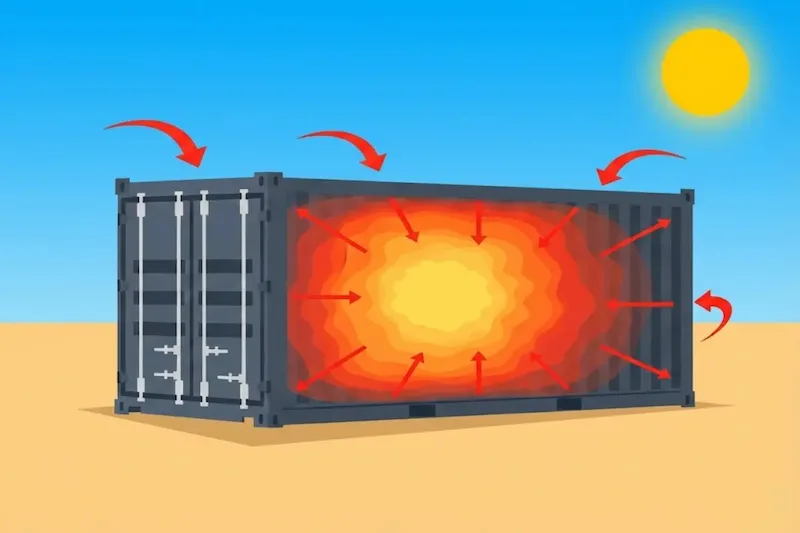
Shipping containers become extremely hot primarily because they are made of steel, a highly conductive metal that rapidly absorbs and conducts solar thermal radiation.
If the unit lacks shipping container insulation or proper ventilation, these metal boxes can act like ovens in direct sunlight, often reaching 100°F or higher internally, with heat trapped inside due to limited airflow.
Here’s how this works:
- Steel has a high thermal conductivity, meaning it transfers heat rapidly from the outside surface to the interior. When sunlight hits the container walls and roof, the metal warms quickly and transfers that heat inside.
- Containers are designed to be airtight for secure cargo transport, which means there’s no natural ventilation.
- When warm air gets trapped inside, it has nowhere to go and raises the container’s internal temperature.
Let’s look more closely at the factors that affect container temperatures.
What are the Key Factors That Affect Container Temperature
Key factors affecting container temperature include climate (hot vs cool climate) and geographic location (humid regions vs dry regions, container size (larger containers get hotter), and the container layout (if the longer side of the container is exposed to the sun).
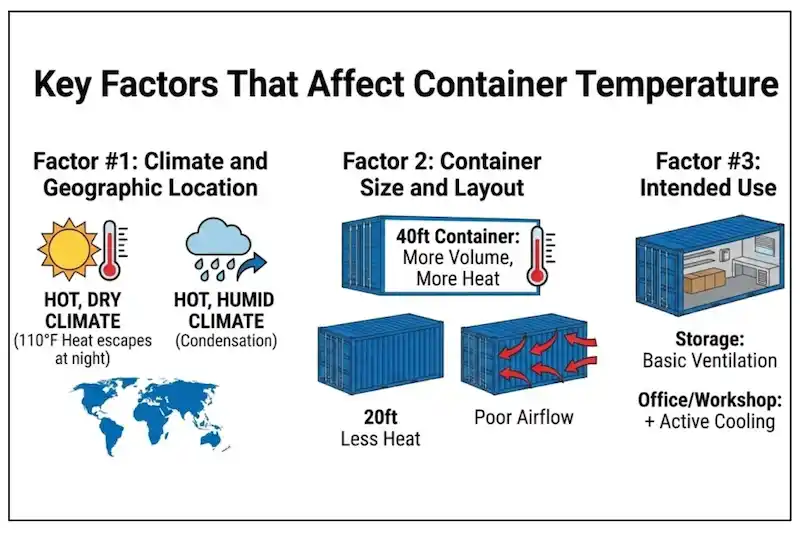
Factor #1: Climate and Geographic Location
Climate plays a major role in shipping container cooling across the US. In hot, dry regions like Arizona, Nevada, or inland California, extreme daytime heat is the main issue. But here, temperatures typically drop after sunset, allowing built-up heat to escape more easily and making ventilation strategies far more effective.
In hot and humid regions such as Florida, Texas, and the Gulf Coast, heat combines with moisture. This raises temperatures and increases the risk of condensation in shipping containers. Cooling solutions in humid climates must manage both heat and moisture.
Knowing your climate type helps you avoid wasting money on solutions that won’t work in your area.
Factor #2: Container Size and Layout
Larger shipping container sizes hold more air volume, which means they also retain more heat.
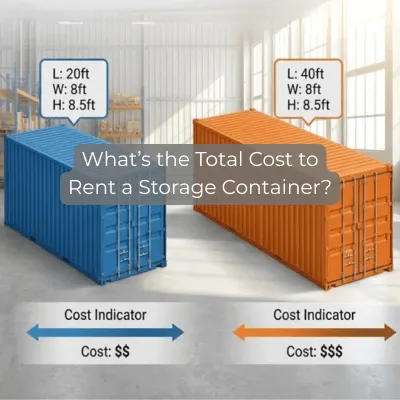
A 40ft shipping container generally stays hotter longer than a 20ft shipping container because there’s more internal space for warm air to accumulate. Larger containers also take longer to cool down. Similarly, a large container has more roof area exposed to the sun, increasing solar gain.
The container layout can also affect the heat and cooling strategy, as they affect airflow patterns. For example, longer containers require more deliberate airflow planning. Without vents or fans at both ends, hot air tends to settle in the center.
Factor #3: Intended Use
How you plan to use the container directly determines your cooling requirements.
Storage containers holding tools or materials may only need basic ventilation and shading. Containers used as offices, workshops, or equipment rooms usually need insulation and active cooling.
Defining your use case helps you allocate your budget appropriately and prevents over-investing in cooling solutions you don’t actually need.
Passive Ways to Keep a Shipping Container Cool
To keep a shipping container cool passively, focus on minimizing direct solar heat gain and promoting airflow. Key methods include painting the roof with white/reflective paint, installing passive louvered vents (especially near the roofline), using external shading like tarps or trees, and placing the container in a shaded location.
These methods prevent heat in a shipping container in the first place or allow accumulated heat to escape naturally, all while keeping your costs low.
Let’s understand this in more detail.
Position the Container in Shade
The simplest way to keep a shipping container cool is to block direct sunlight from hitting the exterior.
- Positioning the container under a canopy or large tree can prevent heat in the shipping container by reducing surface temperatures by 20 to 30 degrees during peak sun hours.
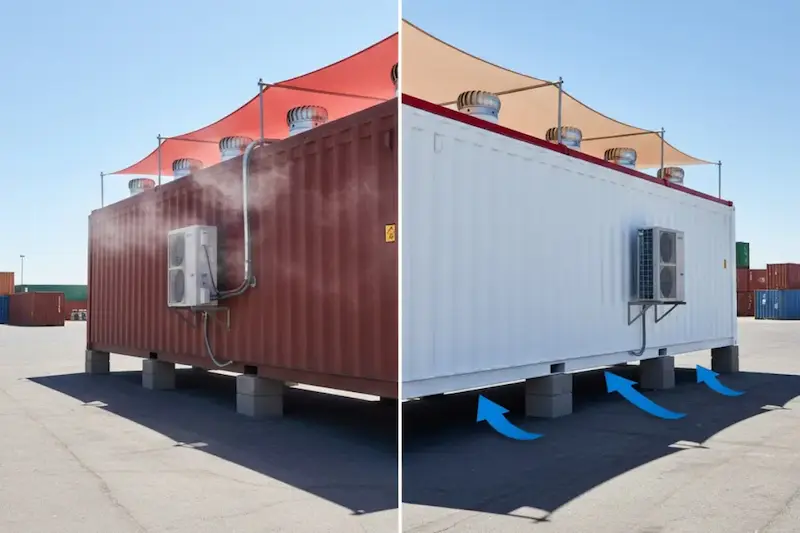
- If natural shade isn’t available, construct a simple roof or shade structure over the container. A metal or fabric canopy elevated a few feet above the container’s roof creates an air gap that prevents direct solar heating while allowing hot air to escape.
- The container position also reduces direct sunlight. Positioning the container so the longest sides receive less direct sun helps reduce heat absorption.
- Elevation helps too. Raising the container off the ground on blocks or a foundation creates airflow beneath the floor, preventing ground heat from radiating upward and allowing air to circulate around the entire unit.
These positioning strategies require planning during initial placement, but they provide continuous cooling benefits without any ongoing maintenance or energy costs.
Use Light or Reflective Roof Coatings
Using light colors or reflective coatings reduces the amount of solar energy your container absorbs.
You can choose elastomeric roof coatings designed for metal surfaces. These products reflect sunlight and UV radiation while providing waterproofing benefits.
Applying a white color is also great for heat reflection, though light gray or beige works as well. The coating should be applied to the roof and, if possible, the exterior walls to maximize the cooling effect.
Some specialized coatings include ceramic or reflective particles that reflect solar radiation before it can be converted to heat. These premium options cost more but offer better performance in extreme climates.
Did you know: A dark-colored container can reach surface temperatures above 150°F in direct sunlight, while a white or reflective surface might only hit 110°F under the same conditions.
Improve Natural Airflow
Even simple airflow improvements help keep a shipping container cool. This includes:
- Leaving doors open when possible to allow hot air to escape, especially during cooler mornings or evenings.
- Spacing containers apart instead of placing them tightly side by side. This gap creates channels for wind to flow through, reducing the heat island effect that occurs when containers sit too close together.
- Creating cross-ventilation paths that improve natural air circulation even when doors are closed.
We’ll cover specific vent types in the next section, but the principle here is simple. Air needs both an entry point and an exit point to flow through the container. Without both, you’ll just have stagnant air that doesn’t help with cooling.
Let’s understand this in more detail.
Ventilation Solutions for Shipping Containers
Ventilation is the backbone of shipping container cooling. It allows accumulated heat to escape while drawing in fresh air. The right vent configuration depends on your container’s use, local climate, and whether you’re pairing vents with active cooling equipment.
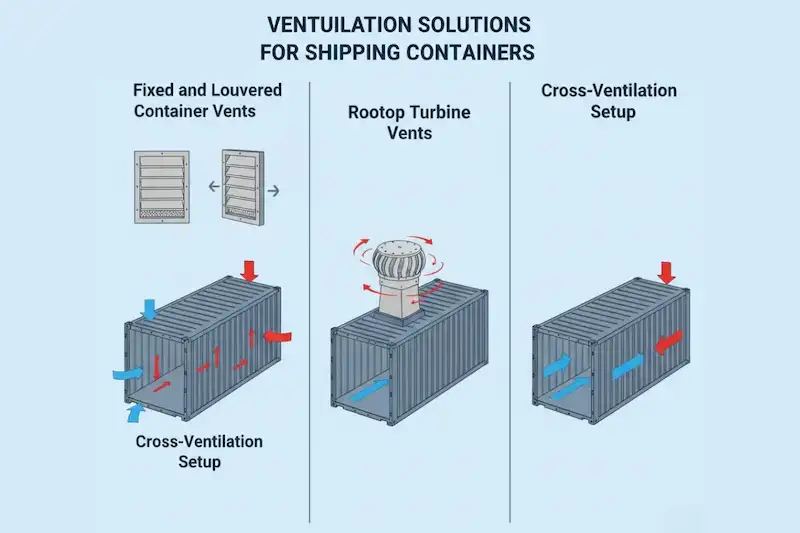
Fixed and Louvered Container Vents
Fixed and louvered container vents are among the most common ventilation upgrades because they improve airflow without adding power requirements. Here’s an overview to help you make the right decision.
Fixed container vents
- Stationary openings with mesh or louvers to block rain, debris, and pests
- Best suited for basic storage where steady airflow matters more than precise temperature control
- Low cost, easy to install, and minimal maintenance
Louvered container vents
- Angled slats allow airflow while deflecting rain
- Some models can be opened or closed to adjust airflow by weather or time of day
For maximum effectiveness, install vents at both ends of the container.
- Place lower vents near the floor on one end and upper vents near the ceiling on the opposite end.
- This height difference creates natural convection that pulls air through the entire space.
- Four to six vents are typical for a 20-foot container, while 40-foot containers often require eight or more, depending on the internal layout.
Important note: Rain protection is built into most quality vent designs, but positioning matters too. Avoid placing vents where they’ll face prevailing winds during storms, which can drive rain through even well-designed louvers. Installing a small weather hood above each vent provides extra protection in areas with heavy rainfall.
Rooftop Turbine Vents
Turbine vents use wind energy to actively pull hot air out of the container and expel it through the vent opening. Even light breezes can keep the turbine rotating, providing continuous exhaust without any electrical connection.
These vents are particularly effective on the roof because they’re positioned at the highest point where hot air naturally accumulates.
Turbine vents work best in areas with consistent wind. If your site is sheltered or wind patterns are unreliable, consider powered exhaust fans instead for cooling a shipping container.
Cross-Ventilation Setup
Cross-ventilation is the most effective ventilation approach for cooling a shipping container. It works by creating a clear path for air to flow from one end of the container to the other. Fresh air enters through intake vents on one side, travels the length of the container picking up heat, then exits through exhaust vents on the opposite side.
The key is to position vents on opposite walls or at the ends.
- For maximum efficiency, place intake vents low on the wall facing prevailing winds and exhaust vents high on the opposite wall. This leverages both wind pressure and thermal convection to move air through the space.
- Adding a few vents along the sides can help in larger containers where air might not reach the middle effectively.
Cross-ventilation works year-round and provides the baseline airflow. In fact, many container offices and workshops rely primarily on this setup, only running shipping container air conditioning during the hottest afternoon hours when passive ventilation can’t keep up.
What are some Insulating options for a Shipping Container?
Top insulating options for shipping containers include closed-cell spray foam for maximum thermal resistance (R-6 to R-7 per inch) and rigid foam boards for easy, space-saving installation. Shipping container insulation doesn’t cool the air directly. Instead, it slows heat transfer, keeping temperatures more stable throughout the day and night.

Insulation is especially valuable in climates with big temperature swings or when using air conditioning. Let’s look at the most common options.
Spray Foam Insulation
Spray foam insulation creates an airtight seal along container walls and ceilings. It offers excellent thermal resistance and helps reduce shipping container condensation by sealing gaps where moisture can form. A typical application applies two to three inches of foam across the walls, ceiling, and floor, providing R-13 to R-20 insulation value.
This option costs more upfront but delivers strong performance for container offices, workshops, and living spaces. It also reinforces the structure and improves long-term comfort.
Rigid Board and Fiberglass Insulation
Rigid foam boards cost less than spray foam and work well for budget-conscious projects. Panels are cut to fit between wall studs or furring strips, then secured with adhesive or mechanical fasteners.
Fiberglass batts are even more affordable. The installation process is similar to that for rigid boards: frame the walls, fit the batts between the studs, add a vapor barrier, and finish with paneling. Fiberglass has a lower R-value per inch than foam products, so you’ll need thicker batts to achieve comparable insulation.
Both rigid boards and fiberglass work adequately for basic temperature control. They won’t match spray foam’s performance, but they’re accessible for DIY installation and keep project costs down.
What are some common Active container Cooling Methods?
Active container cooling methods use powered devices to remove heat and maintain a specific, stable temperature range, often relying on electricity, batteries, or specialized cooling agents.
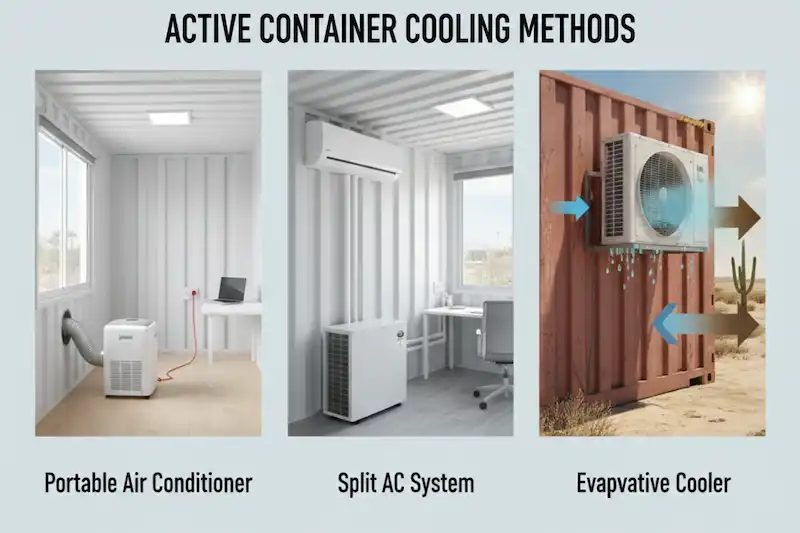
Portable Air Conditioners
Portable AC units are a flexible option for cooling a shipping container because they require minimal installation and no permanent modifications.
- Installation: Most units only need a small wall or window vent to exhaust hot air. In a container, this typically means cutting a simple opening and installing an exhaust vent.
- Best use cases: Ideal for temporary setups or containers that may be relocated later.
- Power needs: Most portable units run on standard 110V outlets, while larger models may require 220V.
Just make sure to size the AC unit based on container volume, insulation level, and local climate. A well-insulated 20ft container in a moderate climate usually needs 8,000–10,000 BTUs. An uninsulated 40ft container in hot regions like Arizona may require 14,000 BTUs or more.
Split AC Systems
Split AC systems are the most effective option for shipping containers that need reliable, long-term cooling. They use an indoor air handler to distribute cool air and an outdoor compressor that releases heat outside.
- Installation: Requires drilling through the container wall to run refrigerant lines and electrical connections. This is a permanent setup and typically requires professional HVAC installation.
- Best use cases: Container offices, workshops, container homes, and other setups where the container stays in one location and is used daily.
- Power needs: More energy-efficient than portable units. Most systems run on 220V, and many models even use inverter technology to reduce power consumption during steady operation.
Split systems have a higher upfront cost but offer quieter operation, lower long-term energy costs, and consistent cooling performance.
Evaporative Coolers
Evaporative coolers, often called swamp coolers, lower temperatures using water evaporation instead of refrigeration. They pull outside air through water-saturated pads, cooling it before pushing it into the container.
- Installation: Requires a water source and a vent or opening for air exhaust. Installation is simpler than AC systems and does not involve refrigerant lines.
- Best use cases: Only effective in hot, dry climates such as the Southwest. In these conditions, evaporative coolers can reduce interior temperatures by 15–25°F. They are not suitable for humid regions, where they add moisture without meaningful cooling.
- Power needs: Very low power consumption compared to shipping-container air conditioning, making them ideal when electrical capacity is limited.
Evaporative coolers offer excellent value for shipping container cooling in dry regions. Before choosing one, make sure to check your local humidity levels for the best results.
Regardless of the cooling option you choose, you will also need to manage humidity and shipping container condensation.
Managing Humidity and Condensation in a Shipping Container
Managing humidity and condensation requires proper shipping container ventilation, insulation, and moisture-absorbing products to prevent rust and damage to the goods inside.
Simply cooling the container isn’t enough because when warm, humid air meets cooler steel surfaces, moisture forms on walls, ceilings, and stored items, leading to shipping container mold, mildew, and corrosion. Even insulated containers in humid climates usually need active moisture control to prevent damage. Here’s how you can do that.
Using Dehumidifiers and Desiccants
Electric dehumidifiers actively remove moisture and work best in offices or sealed containers. They are refrigerant-style units that condense water vapor into a collection tank. Electric dehumidifiers with built-in pumps can continuously drain through a hose, eliminating the need to manually empty collection tanks.
The other option is desiccant products that offer passive moisture control without electricity. These materials absorb water vapor from the air and can be recharged or replaced once saturated. Hanging desiccant bags works well in storage containers where you’re not using active cooling and just need to prevent dampness.
Before you decide which cooling option and dehumidifying system to choose, take a look at the specific use cases below.
Best Container Cooling Strategy by Use Case
Different container applications demand different cooling approaches. Matching your cooling strategy to your specific use case prevents over-investing in unnecessary equipment while ensuring you achieve the comfort and protection levels you actually need.
How to cool a Storage Container?
Basic storage needs minimal cooling intervention. As long as interior temperatures stay below levels that would damage your stored items, the passive strategies we discussed above, like placing the container in shade, are usually sufficient.
For temperature-sensitive items such as electronics, documents, or certain materials, you can add desiccant packs to control moisture and consider installing roof insulation to reduce peak temperatures.
Avoid active cooling unless you’re storing items with strict temperature requirements.
How to cool a Container Office or Workshop?
A container office or workshop needs comfortable temperatures, which means combining insulation with active cooling.
- Start with spray foam or rigid board insulation across all walls and the ceiling to create a thermal envelope.
- Install a properly sized split AC system or portable air conditioner based on your container’s square footage and insulation level.
- Add ventilation vents that you can close when running the AC to prevent treated air from escaping.
- A dehumidifier helps maintain comfortable humidity levels, especially in regions with humid summers.
Along with these active cooling strategies, use passive ones as well. Position the container to minimize sun exposure, and consider installing a roof shade structure for additional cooling.
How to cool a container in Extreme Heat?
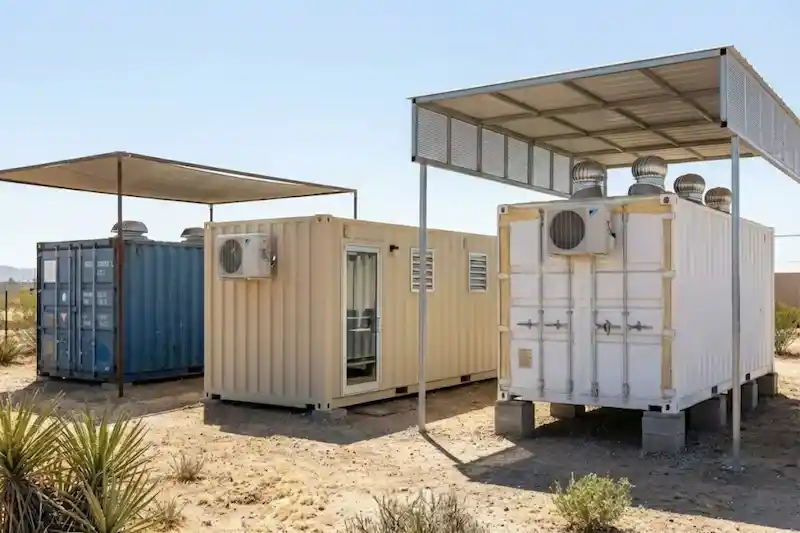
To cool a container in extreme heat, prioritize maximum shipping container ventilation, heat reflection, and insulation. This is especially important for containers in regions such as Arizona, Nevada, or southern Texas, where temperatures exceed 110°F for weeks at a time.
These locations require a comprehensive approach that layers multiple cooling strategies together.
- Start with maximum passive protection. Position the container in shade or under a dedicated shade structure with ventilated space above the roof.
- Apply white reflective coating to all exterior surfaces.
- Insulate heavily with closed-cell spray foam to achieve at least R-20 values.
- Install both passive vents for nighttime cooling and a split AC system sized generously for the space.
- Elevating the container off the ground and creating airflow beneath the floor also helps reduce heat transfer from sun-heated ground.
These strategies cost more upfront, but they’re necessary to make containers livable in extreme conditions. But to make sure you’re not wasting money, avoid common mistakes people usually make when cooling their containers.
Common container cooling mistakes to avoid
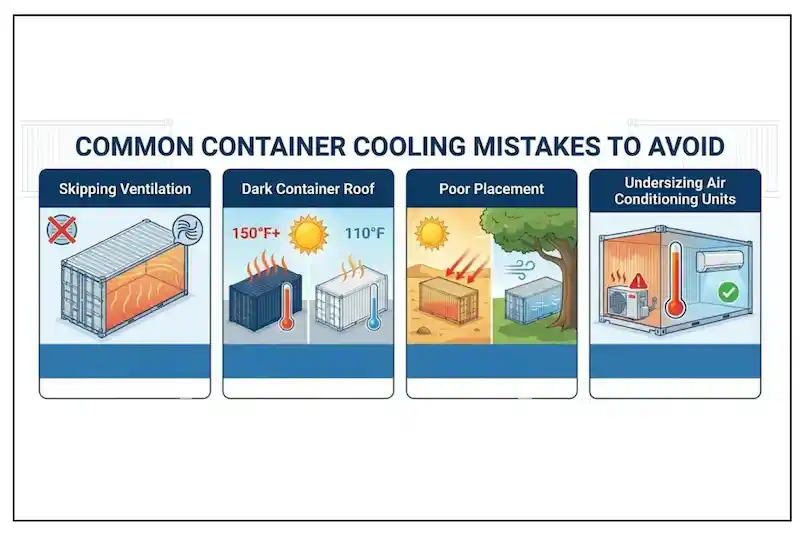
Some common container cooling mistakes include skipping ventilation entirely, choosing a dark container color, poor container placement, and undersizing air conditioning units.
- Skipping shipping container ventilation: People assume insulation alone will solve heat issues, but without airflow to remove accumulated hot air, the container becomes an insulated oven. Ventilation and shipping container insulation work together; one doesn’t replace the other.
- Dark container roof: A dark roof can reach temperatures 40 degrees higher than a white one. This single oversight forces your cooling system to work much harder and makes passive cooling far less effective.
- Poor placement: Setting a container in full sun when shade is available nearby, or positioning it where air can’t circulate around the exterior, creates unnecessary heat gain.
- Undersizing air conditioning units: You may buy the cheapest or smallest AC unit without calculating actual cooling needs. An undersized unit runs constantly, never achieving comfortable temperatures, and burns out prematurely from overwork. Use ACs based on container volume, insulation, and climate.
These mistakes are common, but quite fixable. The biggest mistake is choosing a poor-quality container to begin with.
Poor-quality containers can undermine all cooling efforts. Containers with thin steel, warped panels, damaged door seals, or hidden gaps allow heat and humid air to constantly leak in, reducing insulation performance, overwhelming ventilation, and forcing air conditioning systems to work harder without ever stabilizing interior temperatures.
That’s why choosing a trusted container supplier like Pelican Container matters.
Why Choose Pelican Containers for Temperature Sensitive Storage
Pelican Containers understands that effective climate control starts with the right container.
- We offer a range of container options suitable for different cooling approaches.
- Our inventory includes containers in all sizes, so you can choose the one that best fits your cooling needs and budget.
- With nationwide container availability, you get the container you need when and where you need it.
- Our experts help you throughout the container buying process, from providing the best quote to understanding your shipping container delivery site, to ensure the container is placed safely and for maximum cooling.
Whether you’re setting up a storage unit, workshop, or full-time office space, Pelican Containers provides the best-quality containers out there.
Request a quote from Pelican Containers, and our team will help you select the right container and coordinate modifications that match your cooling strategy.
Vatsala Singh is a B2B content strategist and writer specializing in the shipping, logistics, and container industry. She has written extensively about container types, container modifications, procurement challenges, and the market shifts that influence container demand.
With a Master’s degree in English Literature and strong research skills, she brings depth, clarity, and accuracy to every article. Through her content, she combines industry knowledge with practical insight, helping readers understand what’s happening in global trade and how it affects container buyers, freight forwarders, and equipment managers.
When she’s not writing, Vatsala is usually reading fiction, exploring new ideas, or learning about how different industries work.
She believes that good content should simplify complexity, support smarter decisions, and make the container world easier to navigate, one article at a time.
Vatsala Singh is a B2B content strategist and writer specializing in the shipping, logistics, and container industry. She has written extensively about container types, container modifications, procurement challenges, and the market shifts that influence container demand.
With a Master’s degree in English Literature and strong research skills, she brings depth, clarity, and accuracy to every article. Through her content, she combines industry knowledge with practical insight, helping readers understand what’s happening in global trade and how it affects container buyers, freight forwarders, and equipment managers.
When she’s not writing, Vatsala is usually reading fiction, exploring new ideas, or learning about how different industries work.
She believes that good content should simplify complexity, support smarter decisions, and make the container world easier to navigate, one article at a time.
Frequently asked questions
How to reduce heat in a container?
To reduce heat in a container place the container in shade, improve ventilation, use reflective roof coatings, and limit direct sun exposure.
How to climate control a shipping container?
Climate control a shipping container by combining insulation, ventilation, air conditioning, and humidity control based on your climate
Can you put AC in a shipping container?
Yes, you can install portable or split air conditioning systems in a shipping container with proper venting and power.
What is the cheapest way to insulate a shipping container?
The cheapest way to insulate a shipping container is to use rigid foam boards or fiberglass with proper vapor barriers.
How much does it cost to insulate a 40ft shipping container?
Insulating a 40ft shipping container typically costs $1,500–$3,500, depending on whether you use fiberglass, rigid foam boards, or spray foam insulation.