Car storage containers: how to store a car in a shipping container

Can you store a car in a shipping container?
Yes. A standard 20ft car storage container fits one sedan, coupe or small SUV, a 40ft fits two standard cars, and a 40ft high cube suits lifted trucks and vans. Measure your car against the door opening, not just the box, because you usually can’t open the car doors once you’re parked inside. Add vents before storage, because condensation is what rusts a car in a closed container.
Key takeaways
- A 20ft container is about 19’4″ long and 7’8″ wide inside, enough for one car.
- A 40ft holds two standard cars nose to tail; a high cube adds a foot of height.
- A standard box leaves about 10 inches on each side of a sedan. If you need to get in and out, choose an open side or tunnel container.
- Before the car goes in, fit vents, lay a drip mat and level the base.
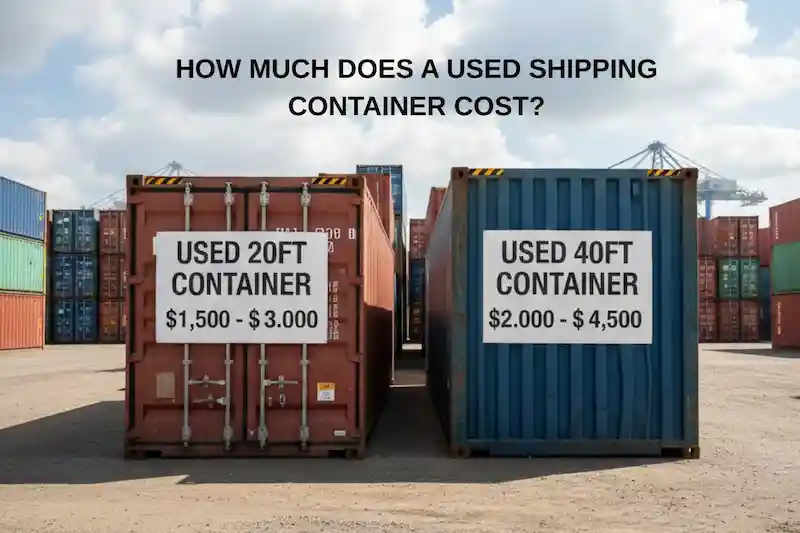
- Used wind and watertight 20ft containers run about $1,400–$2,500 at the depot (US market, November 2026).
Updated November 2026.
What is a car storage container?
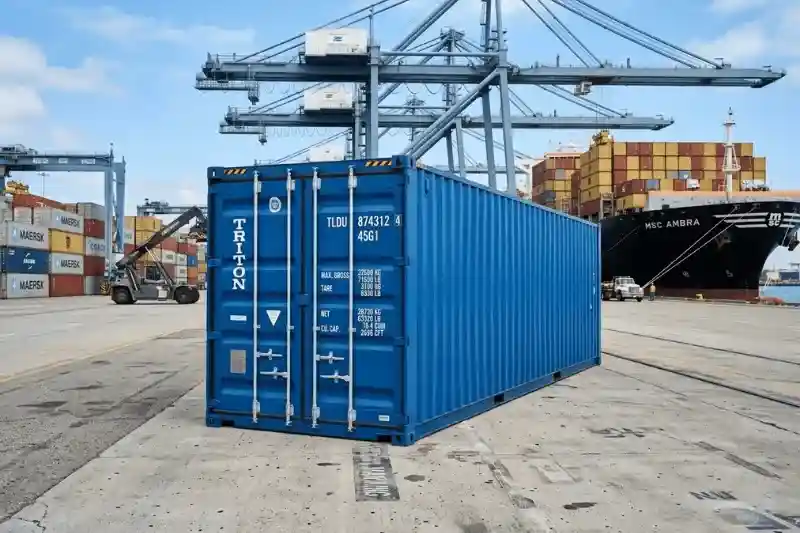
A car storage container is a steel ISO shipping container, usually 20ft or 40ft, used to park and protect a vehicle. Most are standard dry containers built from Corten steel, with a marine-grade plywood floor and two cargo doors at one end. The doors close with cam-lever locking bars, and many units carry a steel lockbox that shields the padlock from bolt cutters.
You’ll also hear them called vehicle storage containers or conex boxes. They’re the same boxes that cross oceans on cargo ships, either retired from shipping or bought new after a single trip. Owners use them for classic cars, seasonal convertibles, project cars waiting on parts and dealer overflow.
Benefits of a vehicle storage container
Weather, UV and hail protection
A wind and watertight container keeps rain, snow, hail and sun off the car. Sunlight fades paint and dries out rubber seals and dashboards over time, and a car parked in a steel box sits in the dark. Inside the box, the risk is condensation from humid air.
Security
Steel walls, a padlock inside a lockbox and doors you can face toward the house make a container hard to break into. Nobody walking past can see what’s inside, which matters for collector cars. For a valuable car, add a disc or puck lock and a battery camera or alarm that alerts your phone.
Cost compared with a garage or storage facility
A used container is a one-time purchase that sits on your own land and can move with you. A garage means permits and construction, and a storage facility bills every month for as long as the car stays.
| Option | Upfront cost | Ongoing cost | Access | Moisture control | Can you move it? |
|---|---|---|---|---|---|
| Shipping container | Container plus delivery | Upkeep only | On your property, any time | Vents, desiccant, optional insulation | Yes |
| Built garage | Highest: permit, foundation, construction | Upkeep | On your property, any time | Good, with power and insulation | No |
| Self-storage unit | Low | Monthly rent | Facility hours | Varies; climate-controlled units cost more | No |
| Car storage facility | Low | Monthly rent, usually the highest | Facility hours or by appointment | Often climate-controlled | No |
Whichever you choose, call your insurer before the car goes into storage, because each policy treats a parked or unregistered car differently.
Can a car fit in a shipping container?
Most cars fit easily on length. Width decides whether you can open the doors, and door height decides whether tall vehicles get in at all. Before you decide whether a car will fit in a shipping container, take three measurements: bumper to bumper, mirror to mirror, and the highest point including any roof rack.
| Container | Inside length | Inside width | Inside height | Door opening (W × H) | Fits |
|---|---|---|---|---|---|
| 20ft standard | 19’4″ (5.90 m) | 7’8″ (2.35 m) | 7’10” (2.39 m) | 7’8″ × 7’6″ (2.34 × 2.28 m) | One sedan, coupe or small SUV |
| 40ft standard | 39’5″ (12.03 m) | 7’8″ (2.35 m) | 7’10” (2.39 m) | 7’8″ × 7’6″ (2.34 × 2.28 m) | Two standard cars |
| 40ft high cube | 39’5″ (12.03 m) | 7’8″ (2.35 m) | 8’10” (2.69 m) | 7’8″ × 8’5″ (2.34 × 2.58 m) | Lifted trucks, vans, tall SUVs |
| 45ft high cube | 44’6″ (13.56 m) | 7’8″ (2.35 m) | 8’10” (2.69 m) | 7’8″ × 8’5″ (2.34 × 2.58 m) | A long vehicle, or a car plus a workbench |
These are typical figures; individual containers vary by an inch or so. The floor is rated for forklift traffic, so it carries a car’s weight easily.
| Vehicle | Typical length | Typical height | 20ft | 40ft | 40ft high cube |
|---|---|---|---|---|---|
| Compact car | 14–15 ft | 4’8″–4’10” | Yes | Yes, two | Not needed |
| Midsize sedan | 15.5–16.5 ft | 4’8″–4’11” | Yes | Yes, two | Not needed |
| Small SUV | 15–15.5 ft | 5’5″–5’9″ | Yes | Yes, two | Not needed |
| Full-size SUV | 17–19 ft | 6’3″–6’5″ | Yes; extended-length models are tight | Yes, two | Not needed |
| Crew-cab pickup | 19’4″–20’4″ | 6’3″–6’5″ | No | Yes | If lifted |
| Cargo van | 18–22 ft | 6’11” (low roof) to 9’+ (high roof) | Short low-roof models only | Low roof | Medium roof, if under 8’5″ |
Ranges are typical for current US models. Check your own vehicle’s spec sheet before you order.
How many cars fit in a 20ft container?
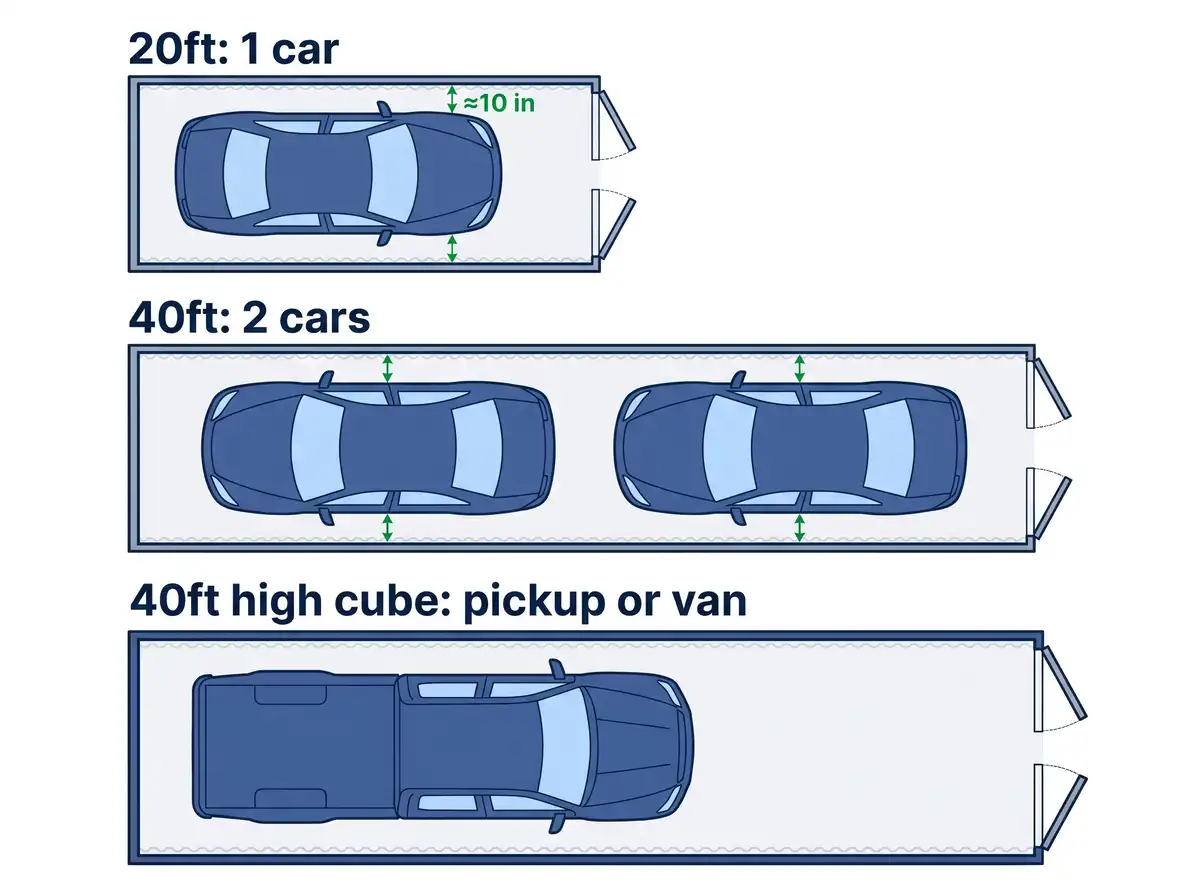
One. The 19’4″ inside length takes any sedan, coupe or small SUV, with room left for a tire rack or a motorcycle. Two cars only fit if both are microcars under about 9.5 ft long.
Full-size pickups are the exception. A Ford F-150 SuperCrew with the 5.5-ft box is 231.9 in long, and a 20ft container is about 232 in long inside. That’s a fraction of an inch to spare, so in practice crew-cab pickups belong in a 40ft.
How many cars fit in a 40ft container?
Two standard cars, parked nose to tail. With two 16-ft sedans, the 39’5″ inside length leaves about 7 ft spare, enough to walk between them. Three cars only fit if each is under about 12.5 ft. Shippers fit four by stacking cars on racks, which is a transport setup.
High cube containers for trucks, vans and lifted SUVs
A 40ft high cube container is a foot taller inside than a standard box, and its door opening is about 8’5″ high instead of 7’6″. Most stock pickups and full-size SUVs stand under 6’6″ and clear a standard door. You need the high cube for lifted trucks, roof tents, roof racks and medium-roof vans. High-roof vans over 8’5″ won’t fit any standard container, and a 45ft high cube adds five feet of length for a long-bed truck.
Can you open the car doors inside?
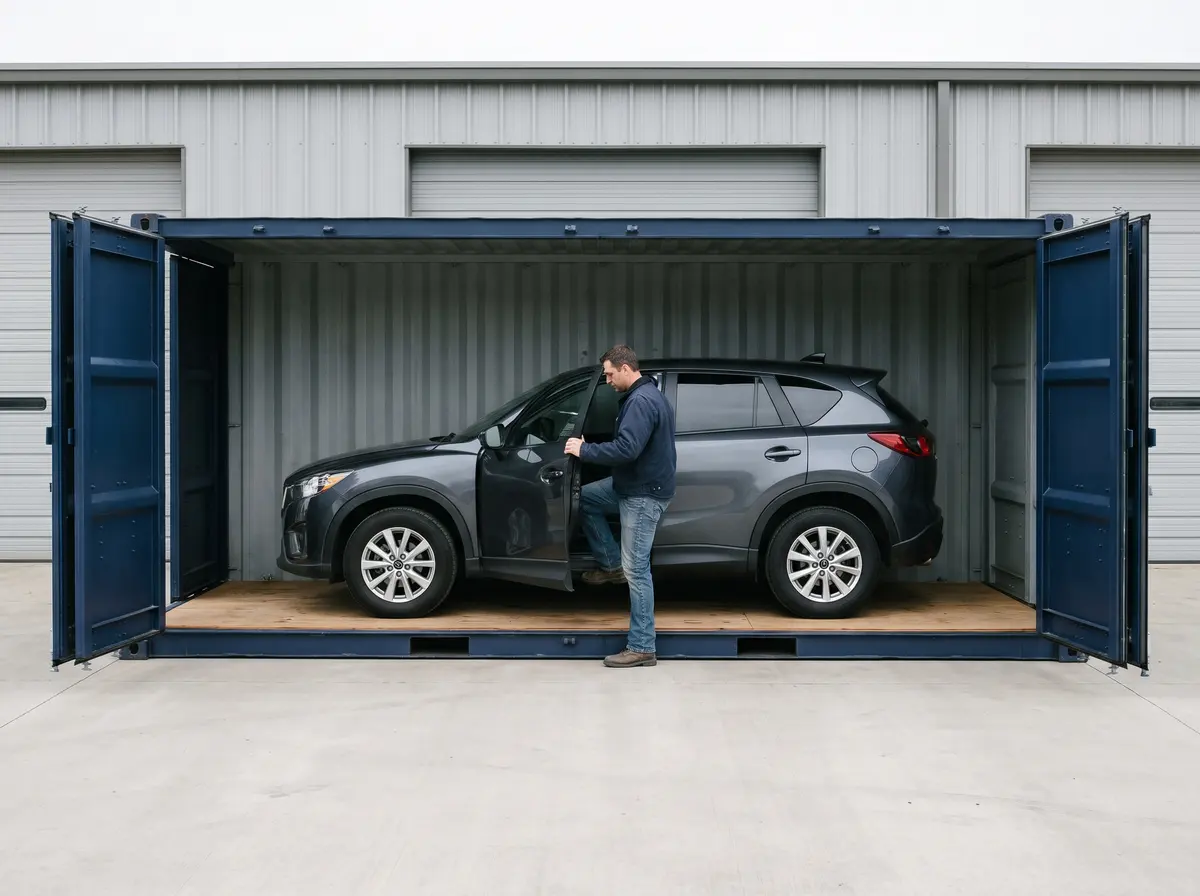
Usually not. Every standard container is about 7’8″ wide inside, the same in a 20ft as in a 40ft. A typical sedan is about 6 ft wide without mirrors, which leaves roughly 10 inches on each side. That’s enough to park but not enough to open a door and step out, so owners end up climbing out through a window.
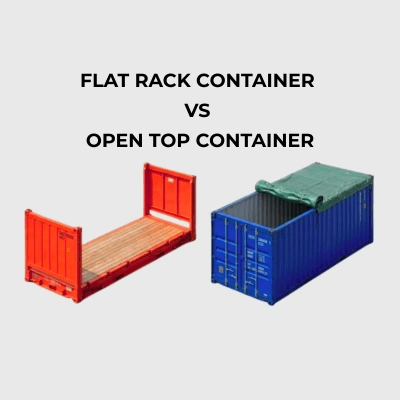
Two container types fix this. An open side container has doors along one full side, so you park, open the car door and step out. A tunnel container has cargo doors at both ends, so you drive in one end and out the other. Both have more door seals than a standard box, so check the gaskets once a season.
How to store a car in a shipping container, step by step
Storing a car in a shipping container starts with the car, then the container and the ground it sits on.
Prepare the car
- Wash it, including the undercarriage. Dirt and road salt hold moisture against the steel.
- Vacuum the cabin and take out food, wrappers and anything damp.
- Change the oil. Used oil carries contaminants that sit on engine parts for months.
- Top off the coolant, brake fluid and washer fluid.
- Fill the tank and add fuel stabilizer, then run the engine for a few minutes so treated fuel reaches the lines. A full tank leaves less room for condensation.
- Inflate the tires to the pressure on the door sticker to reduce flat spots. For storage of more than a few months, jack stands take the weight off the tires.
- Connect a battery maintainer, or disconnect the negative terminal if there’s no power. Clean any corrosion off the terminals first.
- Fit a breathable car cover and crack the windows slightly so the cabin can air out.
Prepare the container and the ground
- Pick a firm, level spot: compacted gravel, concrete or packed dirt. A box set out of level twists its frame, and the doors stop sealing and locking properly.
- Leave several feet clear at the door end so the doors swing fully open, plus a straight run to drive in.
- Make sure the delivery truck can reach the spot. A tilt-bed truck needs a clear, straight approach to slide the container off; without one, you’ll need a crane.
- Raise the container on blocks or a foundation where pests are a problem.
- Check the door gaskets, the floor and the roof for daylight and soft spots before the car goes in.
- Fit at least two vents on opposite ends for cross-airflow.
How to secure a car in a shipping container
- Lay a drip mat under the engine and transmission. Oil soaks into the plywood floor and doesn’t come out.
- Drive in slowly over a ramp. The container floor sits a few inches above the ground on its bottom rails, so low cars need a longer ramp or blocks at the door sill.
- Center the car and leave it in park or in gear. For storage longer than a few weeks, skip the parking brake, which can stick.
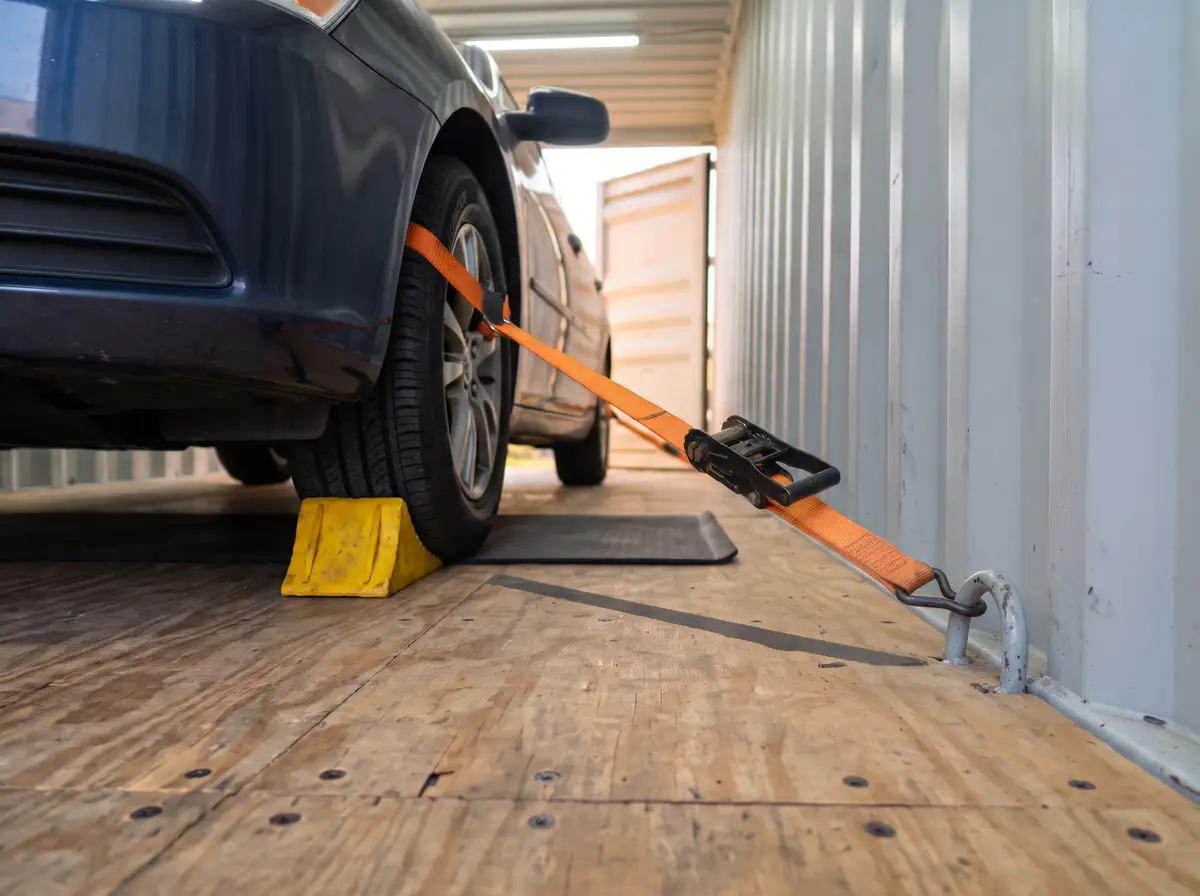
- Chock every wheel, front and back.
- Run ratchet straps from the tow eyelets or wheel straps to the lashing rings along the floor. This matters most if the container will be moved with the car inside.
- Lock the doors with a padlock inside the lockbox.
How to stop condensation and rust
Steel heats up in the sun and cools fast at night. When warm, humid air inside the box meets cold steel, it condenses and drips onto whatever is below. That’s how cars rust in a closed container. Controlling the air inside is the fix:
- Fit at least two vents, and more in humid climates. A small solar vent fan pushes damp air out without mains power.
- Place desiccant bags around the car and swap them when they’re full.
- Coat the underside of the roof with anti-condensation paint, which holds moisture instead of letting it drip.
- Run a dehumidifier with a drain hose if the container has power.
- Insulate with spray foam or a fleece liner to keep the steel above the dew point, the temperature at which moisture forms.
- Use a breathable cover. A plastic tarp traps moisture against the paint.
Our guide to stopping container condensation goes deeper on vent placement and coatings.

What does car storage in a container cost?
A used 20ft wind and watertight container, the usual storage grade, runs about $1,400–$2,500 at the depot in the US right now. Delivery adds $350–$800 within 50 miles of a depot. That puts a one-car setup at roughly $1,750–$3,300 before vents and extras, paid once.
| Container | Used, wind and watertight | Used, cargo-worthy | One-trip (new) |
|---|---|---|---|
| 20ft standard | $1,400–$2,500 | $2,000–$3,500 | $2,800–$5,500 |
| 40ft standard | $2,000–$3,500 | $2,800–$4,500 | $4,500–$7,500 |
| 40ft high cube | $2,400–$4,000 | $3,200–$5,200 | $4,000–$9,000 |
| 45ft high cube | $2,700–$4,100 | $3,500–$5,300 | $5,800–$8,800 |
| 20ft open side | Rarely available used | Rarely available used | $5,500–$7,500 |
| 40ft high cube open side | Rarely available used | Rarely available used | $6,900–$13,500 |
The wide range on 40ft open side units comes from full-side doors versus a single side door.
| Distance from the depot | Typical delivery cost |
|---|---|
| 0–50 miles | $350–$800 |
| 50–100 miles | $500–$1,000 |
| 100–200 miles | $700–$1,700 |
| 200–250 miles | $1,000–$2,500 |
| 250+ miles or rural | $1,500–$2,500+ |
Longer hauls run roughly $1–$4 per mile. If a tilt-bed truck can’t reach your spot, crane service adds $800–$2,500.
Grade, size, distance from the nearest of our 150+ depots and season all move the price. Prices often dip 10–25% in February–March and September–October, and one-trip prices have eased a lot since the 2021–22 peak, especially on 40ft units.
If you only need storage for a season, renting or rent-to-own on a standard container spreads the cost. Open side, tunnel and 45ft high cube units are sale only.
Useful upgrades for car storage
We supply the container; owners usually fit the extras themselves or through a local fabricator. Our post on container modification ideas covers the options.
- Power, from an electrical package or a small solar kit, runs a battery maintainer, a dehumidifier and LED lights. Without power, plan on disconnecting the battery.
- Extra vents or a solar vent fan improve airflow.
- Insulation helps in hot, humid or freezing climates.
- A roll-up door in place of the swing doors makes driving in easier.
- Wall shelving holds tires, parts and detailing supplies.
- A disc or puck lock fits inside the lockbox.
Car lifts and multi-car racks are dealer and workshop fit-outs; see our page on containers for car dealers and showrooms. If you’re planning something more permanent, browse these shipping container garage and carport ideas.
Storing a car vs shipping a car in a container
Storage and shipping use the same box under different rules. A container that travels by sea needs a valid CSC safety plate and a cargo-worthy grade, and the car has to meet the carrier’s rules on fuel and batteries. A storage container only has to keep water out, which is why wind and watertight units are the usual choice.
If you’re comparing car shipping containers to move a vehicle across the country or overseas, that’s a transport job. Pelican sells and rents the containers, and our sister company FasterFreight handles vehicle transport.
Do you need a permit?
It depends on your city or county. Many treat a container as an accessory structure, with rules on setbacks, placement and how long it can stay, and homeowners associations can restrict them further. Check before the container is delivered. Our guide to keeping a shipping container on your property covers what to ask.
Common car storage mistakes to avoid
- Sealing the box with no vents, which traps humid air.
- Buying the wrong size: a crew-cab pickup in a 20ft, or a lifted truck in a standard-height box.
- Covering the car with a plastic tarp.
- Saving a few hundred dollars on an as-is container with leaking seals.
- Setting the box on soft or uneven ground, so the doors stop sealing.
- Skipping the drip mat, so oil soaks into the floor.
- No pest plan: food left inside, gaps around the doors, a box sitting on bare dirt.
- No battery plan, so the car won’t start in spring.
Where to buy or rent a car storage container
Pelican Containers sells and rents shipping containers for car storage from 150+ depots, with delivery to all 50 states, usually in 2–5 business days. Depot staff check every container before it’s released, and you can add an independent survey for an extra fee if you want a written condition report.
Pick a 20ft shipping container for one car, a 40ft shipping container for two, or an open side unit if you need to get in and out of the car. Tell us the vehicle and your ZIP code when you get a quote, and we’ll match the size, grade and nearest depot.
What Can You Fit into Our 40 ft Shipping Container? - Pelican Containers
Aren’t you mind blown? Maybe! Apart from the trivia, our motto has always been to transport your goods and commodities with utmost care and safety. And when it comes to storage, Pelican Containers has got you covered! What can you fit into container: – 2 Cars – 168 Tyre’s – 200 Mattresses – 4000 Shoe Boxes – 48,000 Bananas – 7,300 Gallons of Water.
Vatsala Singh is a B2B content strategist and writer specializing in the shipping, logistics, and container industry. She has written extensively about container types, container modifications, procurement challenges, and the market shifts that influence container demand.
With a Master’s degree in English Literature and strong research skills, she brings depth, clarity, and accuracy to every article. Through her content, she combines industry knowledge with practical insight, helping readers understand what’s happening in global trade and how it affects container buyers, freight forwarders, and equipment managers.
When she’s not writing, Vatsala is usually reading fiction, exploring new ideas, or learning about how different industries work.
She believes that good content should simplify complexity, support smarter decisions, and make the container world easier to navigate, one article at a time.
Frequently asked questions
Can you park a car in a storage container?
Yes, if it’s a steel shipping container with a plywood floor and a door opening wide enough for the car. A standard 20ft container takes one car, and you’ll need a short ramp to get over the door sill.
Can you put a car in a storage pod?
Check the pod company’s rental terms first, since portable storage units set their own rules on vehicles. A steel shipping container with a marine-grade plywood floor is built to carry a car’s weight.
Can 2 cars fit in a 20ft container?
Only two microcars under about 9.5 ft long each. A 20ft container holds one standard car, or one car plus a motorcycle. For two full-size cars, use a 40ft.
Will a full-size pickup fit in a 20ft container?
Most crew-cab pickups won’t. They run about 19’4″–20’4″ long, the same as or longer than a 20ft’s inside length. A regular-cab F-150 with the 6.5-ft box (213.2 in) fits; otherwise go to a 40ft.
Do I need to protect the container floor?
Lay a drip mat or plastic sheet under the engine and transmission. The marine-grade plywood floor is rated for forklift loads, so the only risk is oil soaking into the wood.
Is a car storage container cheaper than a garage?
In most cases, yes. A used 20ft container runs about $1,400–$2,500 at the depot plus delivery, while a built garage needs a permit, a foundation and construction. It can also move with you if you sell the property.
Which container grade is best for car storage?
Wind and watertight (WWT) is the usual storage grade: it keeps water out at the lowest price. Choose one-trip for a clean, like-new interior, or cargo-worthy if you might ship the container later. See our guide to container grades.